EN
 CN
 fr
 es
 ar
 ru
 de
 pt
 tr
 vi
 it
 ja
 ko
 hi


Why Is Manganese Removal From Groundwater Unstable?
Unstable manganese removal is a water-chemistry problem before it is a media problem. Five conditions explain most of the swings: pH below the range where Mn2+ oxidises fast enough, oxidant or dissolved oxygen consumed before the water reaches the bed, contact time too short for a slow reaction, a changed iron-to-manganese ratio, and organic matter competing for the same oxidant. They rarely act alone. The question is which variable moved when the effluent moved, and paired samples plus a trend log answer better than any certificate.
Read the failure before naming the cause
Two records settle most cases. The first is a paired sample: raw water at the inlet and filtrate at the same moment, each split into total and dissolved fractions, the dissolved aliquot field-filtered at 0.45 micrometres. The second is the operating log as a trend: run length, clean-bed differential pressure, backwash volume, first-rinse manganese. Where dissolved manganese is nearly all of the filtrate total, oxidation is failing; where it is mostly particulate, the bed or its hydraulics are failing.
| What the record shows | Condition to test first | First check |
|---|---|---|
| Manganese climbs over weeks, iron low | pH drift, rising oxidant demand | pH and alkalinity at the inlet |
| Manganese slips with flow or season | Contact time, or a new blend | Empty bed contact time at actual flow |
| Manganese spikes on first rinse | Bed disturbance, oxidant residual | Expansion and duration vs commissioning |
| Manganese high with colour, chlorine demand | Organic interference | TOC, UV254, permanganate index trend |
Check in this order: analysis, oxidant balance, inlet pH and alkalinity, contact time, media last. Replacement is the expensive answer reached first most often.
pH has to sit inside a window, and hold there
Manganese is the harder metal to oxidise. Ferrous iron converts quickly once pH is above about 7, which is why iron removal can look healthy in water that cannot touch manganese. Oxidising Mn2+ with dissolved oxygen alone needs a pH near 9.5, and most groundwater sits between 7.0 and 7.5. A catalytic MnO2 surface narrows that gap, which is why a manganese bed works at all near neutral, but it does not close it: the rate still climbs steeply with pH.
Oxidation also releases acid, so water leaves the bed with less alkalinity than it entered with, and a low-alkalinity supply under rising load can pull its own pH down. That is why the problem sometimes appears without a cause. Measure both at the filter inlet, and read a falling alkalinity trend as the warning before a manganese trend.
Oxidant and dissolved oxygen, measured where the bed is
Stoichiometry is easily met on paper: 0.14 mg of oxygen per mg of ferrous iron, 0.29 mg per mg of manganous manganese. Demand is what fails. Ammonia takes about 4.57 mg of oxygen per mg of nitrogen through nitrification, sulfide and organics take their share, and the iron ahead of the manganese takes its own.
Dissolved oxygen therefore has to be read at the inlet. Water can leave the well at 6 mg/L and arrive below 1 mg/L once iron has oxidised in the riser and the main, and a pump change or a new well moves the figure. A chronic shortfall needs aeration sized on total demand, or a stronger oxidant dosed ahead of the bed.
Overdosing is not free. Chlorine above demand raises trihalomethane formation, permanganate carried through turns water pink, and excess ozone oxidises manganese past dioxide to permanganate.
Contact time, and the gap between design and practice
Air oxidation of iron takes minutes. Manganese takes hours unless pH is high or a catalytic surface is present. Design guidance for aerated plants commonly allows five to fifteen minutes of retention before filtration, manganese setting the upper end. In a catalytic bed the figure is empty bed contact time, bed volume divided by flow, quoted at design flow. Seasonal demand, an added well or a de-rated pump changes that flow, and contact time moves inversely with flow.
Crusting, channelling and media loss shorten the effective path. A bed that has given up 150 mm to backwash carryover has given up contact time with it. Track depth against commissioning and check expansion, not rate alone; the backwashing and regeneration requirements for manganese filter media sequence those checks.
A shift in the iron-to-manganese ratio
Iron does three things to a manganese bed, and all three worsen as its share rises. It takes the oxidant first, because Fe2+ oxidises faster and at lower potential. It coats the surface, because ferric hydroxide is captured in the upper bed and the active surface becomes an iron surface. And Fe2+ reduces MnO2, releasing Mn2+: in laboratory work on manganese greensands, co-present Fe2+ cut capacity by 72 to 93 percent.
So manganese can fail while nothing in the manganese system changed. A new well, a blending change or a wet season that lifts iron is enough. Sample total and dissolved iron and manganese together, monthly, and read the ratio as a trend; the iron and manganese removal route for well water shows how the two loads interact.
Organic matter takes the oxidant and holds the metal
Humic and fulvic material interferes twice. It complexes Fe2+ and Mn2+ into forms dissolved oxygen cannot break apart, so an aeration-only plant loses efficiency where colour is present. It also competes for oxidant, so a dose right for the metals alone falls short once organic demand is added. Adsorbed material blocks catalytic sites and feeds biofilm.
Colour, UV254, TOC and permanganate index are the practical indicators, and the trend matters more than any single value. Where organics are the cause, the correction belongs ahead of the bed: coagulation, clarification, carbon, or a stronger oxidant dosed by bench test. The trade-off is real, because burning through organics with chlorine raises disinfection by-product formation.
When the media really is the variable
Sometimes it is. A bed that has turned grey and hard has lost its active coating, and grains that stay grey when rubbed in clean water no longer carry the oxide film the reaction needs. Fines in the drain, falling bed depth and a rising clean-bed pressure drop point to media or hydraulics, not chemistry.
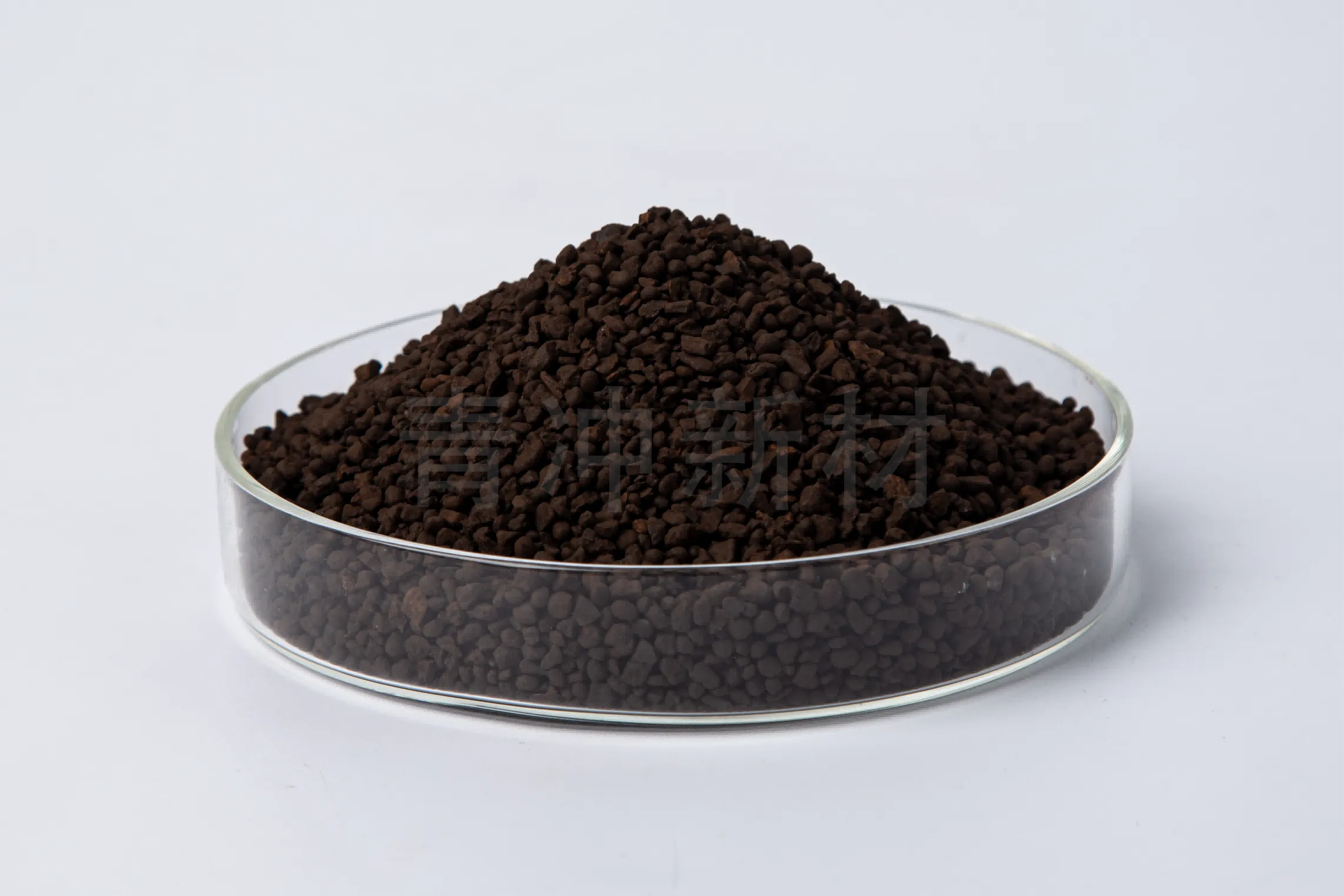
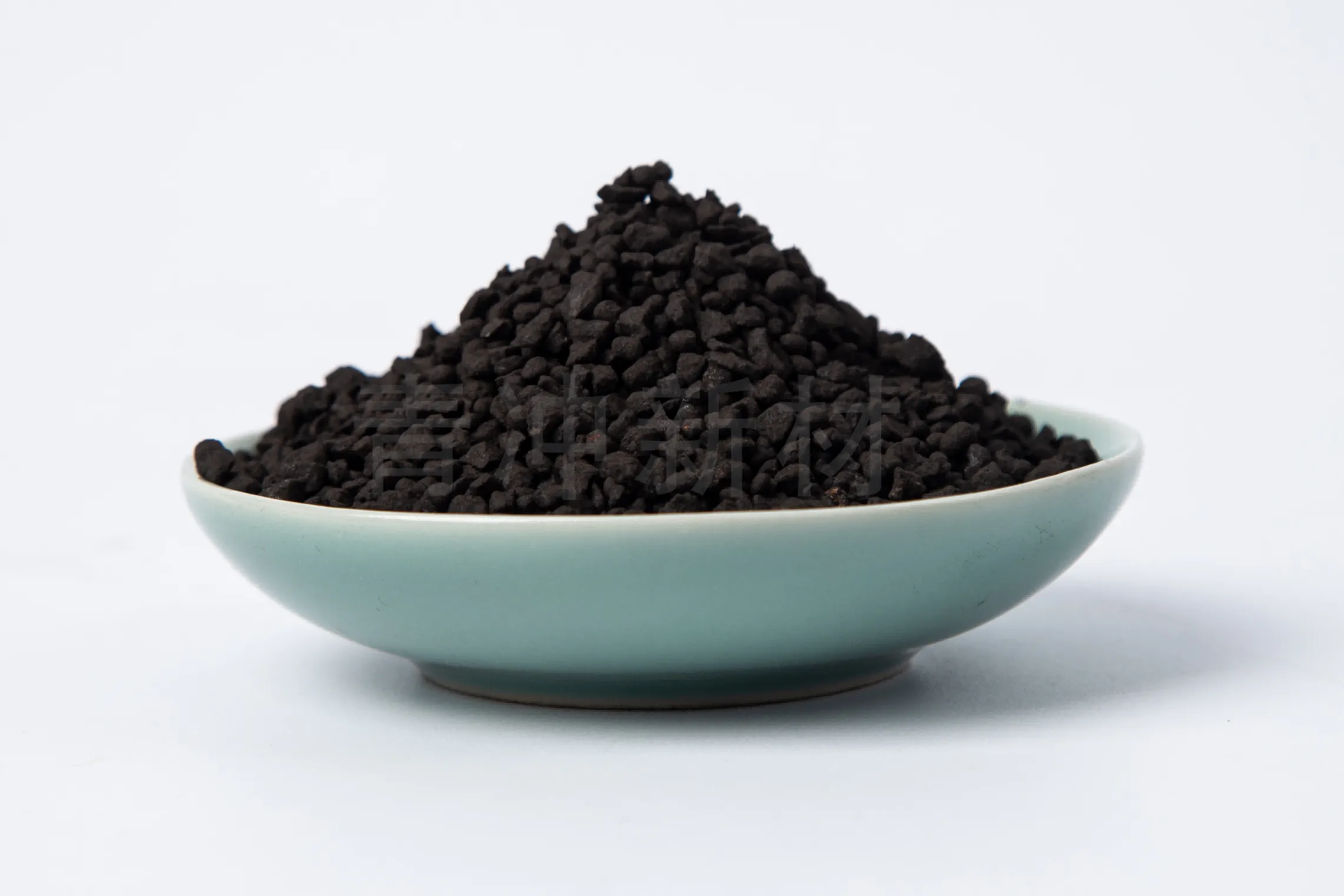
QingChong manganese filter media comes from natural manganese ore, granulated at MnO2 35 to 90 percent, iron capped at 8 percent, silica at 15 percent, in 0.5 to 1.0 mm and 1.0 to 2.0 mm cuts or a specified size. Assay matters where the water sits inside its pH and oxidant window and the bed still cannot hold the load; below that window a higher grade buys surface the process cannot feed. Grade follows the analysis, and the comparison with greensand and BIRM shows where each option fits.
Next step
Send the record and your requirements
For a review, send the paired sample, pH and alkalinity at the filter inlet, dissolved oxygen or ORP at the same point, ammonia, colour or UV254, flow, bed depth and age, the media in service, and three months of results. That set separates chemistry from media before anything is replaced. The water treatment application notes set out the removal route, and the contact page starts the review.
FAQ
We corrected pH and dissolved oxygen but manganese still slips. What next?
Check the iron. A rising iron load consumes oxidant, coats the bed and reductively dissolves manganese oxide, so manganese falls while pH and oxygen still look right. Compare total and dissolved iron and manganese across several months, then recalculate the oxidant balance on the highest iron figure, not the average.
Can a higher-grade manganese sand fix unstable manganese removal?
Only where the bed is the limiting step. If pH, oxidant, contact time or iron loading falls short, a higher MnO2 assay adds surface the process cannot feed. Test the water first, then confirm iron, silica, moisture and size on the certificate for the grade quoted.
Why does manganese break through on the first rinse after backwashing?
The spike points to the wash, not the water. Over-expansion re-sorts the bed, fines and coating leave with the drain, and freshly exposed grains need oxidant to rebuild the film. Compare first-rinse manganese with mid-run manganese to see whether the bed recovers.