EN
 CN
 fr
 es
 ar
 ru
 de
 pt
 tr
 vi
 it
 ja
 ko
 hi


What Water Suits High-Grade Manganese Sand? Read the Raw Water Before You Select
High-grade manganese sand is not better for every water. It earns its cost only where the raw water can already support oxidation: enough pH, enough dissolved oxygen or oxidant, turbidity low enough to protect the bed, and an iron and manganese load the bed can carry. Where pH is low, oxygen is short, turbidity is high or organics consume the oxidant, a higher MnO2 assay gives you a more expensive surface without fixing the process. The order is fixed: characterise the raw water, confirm the oxidation step, then choose the grade.
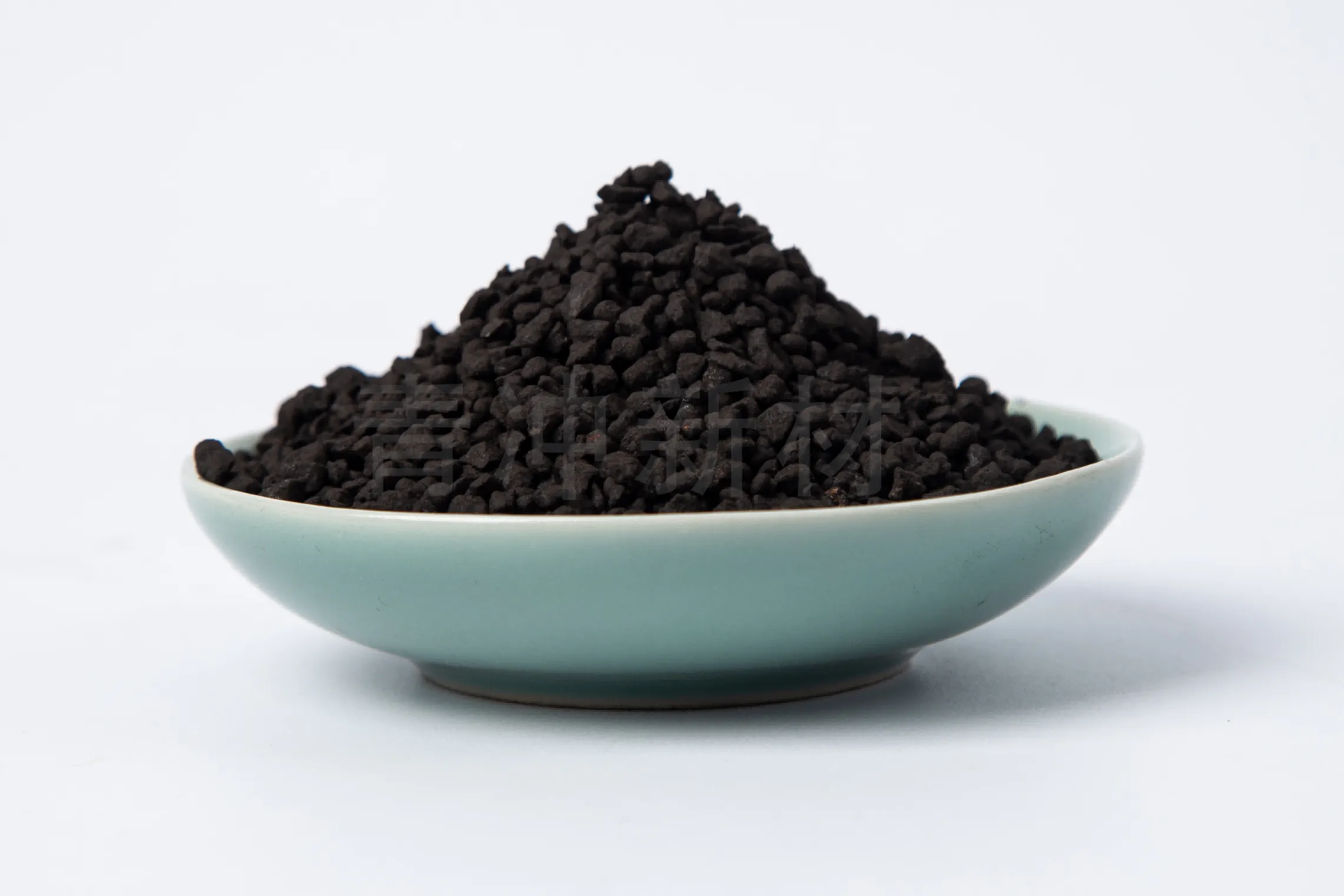
What high content measures, and what it does not
High content means the MnO2 assay sits at the top of a supplier's grade range. It is a relative term, not a standard. The number that governs a purchase is the assay on the certificate for the grade actually quoted, read alongside the rest of that certificate.
The bed does two jobs, and the assay speaks to only one of them. It provides a catalytic surface for oxidising dissolved Fe2+ and Mn2+ into insoluble forms, and it provides a granular structure that filters the resulting particles out. The second job depends on particle-size distribution, bed depth, void space and backwash, none of which a MnO2 percentage describes. That is why a premium grade can underperform a mid-range one in the wrong water.
Why the raw water decides
Only dissolved metal needs oxidation. Iron and manganese already present as particles can be filtered; the dissolved fraction is what the bed must convert. Iron is the easier target and oxidises across a wider pH band. Manganese is slower, needs a higher redox potential and more contact time, and operating guidance for manganese media commonly puts the practical floor near pH 7.5. The oxidant has to come from somewhere: aeration, chlorine, permanganate or ozone. Oxidation also consumes oxygen in proportion to the load, roughly 0.14 mg of oxygen per mg of ferrous iron and 0.29 mg per mg of manganous manganese before any excess, so a heavy iron load can strip the oxygen before manganese removal begins.
Six parameters that decide the grade
Read these six together. Any one of them can disqualify a premium grade, and their interaction matters more than any single value.
| Parameter | What it changes in the process | If it is unfavourable |
|---|---|---|
| Iron, total and dissolved | Solids loading, run length, oxygen demand | Size for the solids load, plan the backwash, and check oxygen; heavy iron can crowd out manganese removal |
| Manganese, total and dissolved | The harder oxidation step and the contact time it needs | Raise pH and redox, extend contact, or plan two-stage treatment |
| Turbidity and suspended solids | Void space and backwash frequency | Pretreat ahead of the bed; a premium media cannot compensate for solids |
| pH | Oxidation kinetics and the condition of the media surface | Correct pH before the filter, then reselect |
| Dissolved oxygen and ORP | Whether oxidant is present where the bed needs it | Add aeration or another oxidant; measure at the filter inlet, not the well |
| Organics: TOC, colour, UV254 | Oxidant demand, fouling and biofilm growth | Oxidise, coagulate or use carbon ahead of the bed |
Three more values belong on the same sheet even though they rarely choose the grade: alkalinity and hardness, because they set scaling risk and pH stability; temperature, because it changes reaction rates and backwash viscosity; and sulfide, ammonia, silica or phosphate, because each adds oxidant demand or fouling potential. Set the effluent target from the rule that applies to your project, with common aesthetic reference points such as 0.3 mg/L iron and 0.05 mg/L manganese in the EPA secondary standards.
When high content is worth paying for
A higher assay can raise the active surface available per unit of bed volume, which may allow a longer run or a smaller bed for the same load. That is a real benefit, and it is conditional. It holds when oxidation is adequate, turbidity is under control and the hydraulics are right; it disappears when any of those is the limiting step. There is a physical trade-off too: a denser, higher-grade material can need a different backwash rate and expansion to fluidise, so the operating window has to be checked rather than copied from another plant. If turbidity or organics are the constraint, the money is better spent on pretreatment than on a premium grade.
The data sheet to request before selection
Ask for the following before a grade is quoted. No supplier can size a bed properly without it, and quotes built on different assumptions cannot be compared.
- Source and variability: well or surface water, depth, seasonal range, blending, and whether the sample followed rain or a flow change.
- Iron and manganese, total and dissolved: field-filter one aliquot at 0.45 micrometres for the dissolved fraction, and report both.
- Turbidity and suspended solids.
- pH, alkalinity and hardness, with units and method stated.
- Dissolved oxygen and ORP, measured at the filter inlet.
- Organics: TOC or COD, colour and UV254; add oil and grease for industrial sources.
- Other demands: sulfide, ammonia, silica, phosphate, chloride and sulfate.
- Sampling quality: headspace-free bottle, cooled and dark, delivered inside the holding time, with the date and sampling point recorded.
Add the process side: target flow and filter rate, vessel diameter, bed depth and freeboard; oxidant type, dose and contact arrangement, with residual measured at the filter inlet; available backwash flow and pressure; and the target limits for iron, manganese and turbidity, plus any discharge limit. Those inputs decide whether the media is asked to do filtration work, oxidation work, or both.
A short selection sequence
- Fix the target: effluent limits, flow and turndown.
- Speciate the metals: dissolved versus total iron and manganese.
- Confirm the oxidation step: pH, oxygen or oxidant, contact time, and whether pretreatment is needed.
- Size the bed from load and rate, then choose particle size for hydraulics and backwash.
- Select the MnO2 assay only among the grades that pass steps one to four, and confirm the full certificate.
Test the grade against the water, not the label
Send the water analysis and the process data through the Qingchong contact page. A grade review can confirm whether a premium manganese sand is justified for this water, or whether the budget belongs upstream in aeration, pH correction or solids removal. The water-treatment application notes set out the removal route, and the media comparison puts the alternatives side by side.
FAQ
Is a higher MnO2 content always better?
No. It raises the active surface available, but it cannot substitute for pH, oxygen, contact time or solids control. Choose the assay last, after the water conditions and hydraulics are settled, and confirm the iron, silica, moisture and particle-size values on the same certificate.
Our iron is high but manganese is low. Do we need a premium grade?
Not automatically. Iron oxidises more readily, so the constraint is often oxygen supply, solids loading and backwash capacity rather than assay. Check dissolved oxygen at the filter inlet and size the bed for the solids load before paying for a higher grade.
What if the raw water pH is low?
Correct pH ahead of the filter. Manganese removal is pH-sensitive and falls away at low pH, so upgrading the media without pH correction spends money on the wrong variable. Confirm the corrected pH at the filter inlet, not at the dosing point.
What water data do you need for a grade review?
Total and dissolved iron and manganese, turbidity, pH, alkalinity, hardness, temperature range, dissolved oxygen or ORP at the filter inlet, organics, and any sulfide or ammonia. Add flow, vessel size, bed depth, oxidant arrangement, backwash capacity and target effluent limits.