EN
 CN
 fr
 es
 ar
 ru
 de
 pt
 tr
 vi
 it
 ja
 ko
 hi


Is MnO2 Content the Right Way to Compare Manganese Sand for Iron Removal?
No. For iron duty, the MnO2 percentage on a quotation is a starting point, not a ranking criterion. A bed removes dissolved iron only when oxygen reaches the filter inlet, pH sits in a workable range, water stays in the bed long enough, and backwash clears the captured floc. Change any one and the same media produces different water. Compare the whole process: fix the raw-water data and hydraulic window first, then read the assay, grain cut and batch documents against them. A quote giving only a percentage is not comparable.
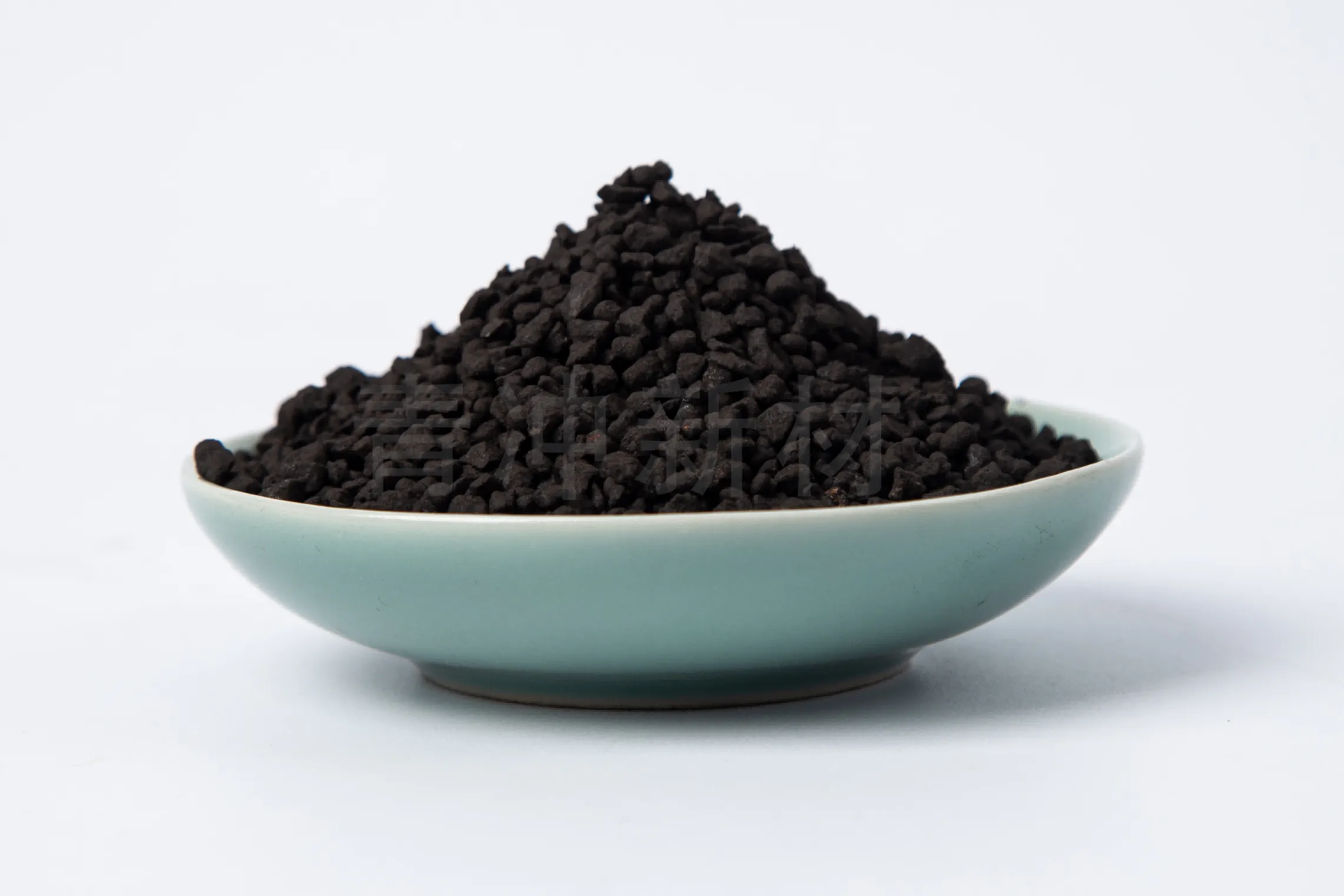
What a MnO2 percentage actually measures
The assay is a mass fraction of MnO2 in natural ore granulate, not a bed-performance number. QingChong manganese filter media is offered across a 35–90% band, so one figure cannot define a grade; what works in the bed is the accessible oxide surface and the coating that forms on the grains.
Make two figures comparable before ranking them: ask the analytical method, dry or as-received basis, guaranteed minimum or typical value, and whether the figure covers the delivered lot. Without a method and lot number, a shipment that differs from the sample cannot be audited.
The QingChong manganese filter media technical properties also cap iron at 8%, silica at 15% and moisture at 5%. Those matter more at incoming inspection than a headline assay.
Why iron duty is a weak test of the assay
Groundwater iron arrives as dissolved Fe2+ and passes a plain filter. Dissolved oxygen converts it to ferric hydroxide floc on the grain surface; the reaction needs about 0.14 mg of oxygen per mg of iron, and pH sets the rate. The media supplies the surface, not the oxidant. For the full sequence, read how manganese sand removes iron.
That creates a trade-off. Once oxygen and pH are right, a higher assay on iron-only duty buys less than the same spend on aeration, bed depth or wash capacity. Manganese duty is the opposite case, where the catalytic surface does more of the work.
If inlet dissolved oxygen cannot be held or pH corrected ahead of the bed, no assay brings the effluent back to target. Fix the front of the plant first.
Start with the raw water, not the quotation
One water analysis, one effluent target and one hydraulic design make offers comparable. Give every bidder total and dissolved iron, manganese, pH, alkalinity, turbidity, temperature range, inlet dissolved oxygen or ORP, ammonia, sulfide, organics, design flow and vessel dimensions. Check the removal route against the water treatment application notes.
State the target. US secondary drinking water goals of 0.3 mg/L iron and 0.05 mg/L manganese are non-enforceable aesthetic values, not your local limit. If a membrane follows the filter, its feed requirement belongs in the inquiry.
Ask each bidder to restate the water analysis and design flow in their offer. A quote assuming a lighter iron load is not a competing bid.
Oxidant supply and pH set the ceiling
Measure oxygen at the filter inlet, not the aerator outlet. The 0.14 mg per mg figure is a floor; ammonia, sulfide and organics take their share first, so size aeration or dosing for total demand.
Oxidation releases acidity, so poorly buffered water drifts down where higher pH is wanted. Municipal design guidance assigns manganese duty a pH 7.0–8.5 band and calls for pilot testing. Log corrected pH and alkalinity at the inlet over a full run.
Where both metals are present, oxidant demand and contact time change. Whether one bed or two stages are needed changes what a grade is worth. A quote that never asks about inlet oxygen, corrected pH or staging has not evaluated the duty.
Grain size, filter rate and contact time move together
These three are one hydraulic decision: grain size sets head loss, filter rate sets floc penetration, and bed depth divided by filter rate gives a rough empty bed contact time (1.0 m at 10 m/h is about six minutes).
Finer grains capture more and build head loss faster; coarser grains run longer but need a stronger wash. The manganese filter media range offers 0.5–1.0 mm, 1.0–2.0 mm and sizes to order, so the cut can follow the wash pump. Since the granulate is crushed and screened, ask for the sieve curve, d10 and uniformity coefficient, not a nominal range.
We puts filter rates at 4–13 m/h and notes that higher iron and manganese loads need lower rates for the same run length. A fine cut at an aggressive rate with high iron is a short-run bed whatever the assay.
| Input | What changes | Ask for |
|---|---|---|
| MnO2 assay | Surface ceiling | COA, method, basis, tolerance |
| Particle size | Capture, head loss, wash | Sieve curve, d10, uniformity |
| Raw water pH | Oxidation rate | Corrected inlet pH, alkalinity |
| Oxidation | Fe2+ to solid | Inlet DO, aeration capacity |
| Filter rate | Run length | Design flow, area, head loss |
| Contact time | Reaction time | Bed depth, EBCT, column test |
Backwash decides whether the bed keeps working
Oxidation turns dissolved iron into a soft floc the bed holds; backwash empties the pores again. We recommend for enough wash flow for roughly 40% bed expansion, set against the coldest wash water. Backwashing and regeneration requirements matter because a bed that cannot be cleaned loses the surface the assay was meant to provide.
Add wash rate, air scour, run length and wash endpoint to the comparison sheet. A fine cut at a high service rate with an undersized pump can cake the bed and shorten runs, whatever the media price.
Turn the comparison into an inquiry checklist
Keep this order as one page beside the quotations.
- Fix one water analysis, one effluent target and one design flow for every bidder.
- Lock inlet DO, corrected pH, bed depth, filter rate, contact time, wash rate and coldest wash water.
- Request one document set: batch COA with method and basis, sieve analysis, iron, silica, moisture, lot number. Technical downloads give you the format.
- Run a column test; agree effluent iron, run length, head loss and post-backwash recovery first.
- Re-test the delivered lot against its COA before unloading the order.
QingChong can review the grade and cut against that data, including a size to order when the wash rate asks for one. Send the hydraulic figures with the water analysis; a review is only as good as its inputs.
Technical review
Send the water data before you compare grades
Send the raw water analysis, target limit, design flow, bed dimensions, inlet oxygen and pH, and backwash rate. The grade and cut can then be matched to the full process window.
Or call +86-731-52326088
FAQ
Two offers differ only in MnO2 content. Which one should we buy?
Neither until the figures describe the same thing: ask for the assay method, basis and batch COA. On iron-only duty, a higher assay rarely changes the outcome once oxygen, pH, contact time and wash capacity are fixed. Test both manganese filter media grades on a column first.
Can higher MnO2 content compensate for low pH or weak aeration?
No. Oxygen converts Fe2+ into a filterable solid and pH sets the rate; media supplies the surface, not the oxidant. Correct pH ahead of the bed, log inlet dissolved oxygen and alkalinity over a full run, and send those readings with the grade inquiry.
What should a batch COA for manganese filter media show?
Ask for the MnO2 assay with method, basis and tolerance, plus iron, silica, moisture, sieve distribution and lot number. The specification caps iron at 8%, silica at 15% and moisture at 5%; ask which are guaranteed for your lot. COA, TDS and SDS are available as downloads.