EN
EN
 CN
CN
 fr
fr es
es ar
ar ru
ru de
de pt
pt tr
tr vi
vi it
it ja
ja ko
ko hi
hi

MnO vs. Manganese Sulfate as a Feed Additive: Cost-Effectiveness, Stability, and Regulatory Comparison
Choosing between manganese monoxide (MnO) and manganese sulfate is not simply a matter of comparing price per ton. A feed mill pays for delivered elemental manganese, but the value of that manganese also depends on biological availability, premix behavior, contaminant control, and whether the exact grade is authorized in the destination market. MnO usually offers more manganese per kilogram and lower water solubility. Manganese sulfate monohydrate supplies less elemental manganese but is more soluble and remains the conventional reference source in much animal-nutrition research. The better purchase is therefore the source that reaches the formulation target at the lowest verified cost without creating stability, handling, or compliance risk.
MnO vs. Manganese Sulfate at a Glance
Both materials supply divalent manganese but behave differently before and after ingestion. The comparison uses manganese sulfate monohydrate (MnSO4.H2O). Because commercial grades vary, use the supplier's guaranteed analysis in every cost calculation.
| Decision factor | Manganese monoxide (MnO) | Manganese sulfate monohydrate |
|---|---|---|
| Elemental Mn | 77.5% theoretical; use the guaranteed batch value | 32.5% theoretical; feed grades commonly specify about 31-32% |
| Water behavior | Insoluble in water; dissolves under acidic conditions | Highly water-soluble and more moisture-sensitive |
| Nutritional reference | Useful source, but relative availability varies by grade and test endpoint | Conventional inorganic reference source in many studies |
| Premix interaction | Lower ion release can reduce direct reactivity | Faster ion release can increase contact reactions in concentrated premixes |
| Best economic case | High verified Mn concentration plus acceptable in-vivo availability | When predictable solubility and a lower inclusion mass are not the main priority |
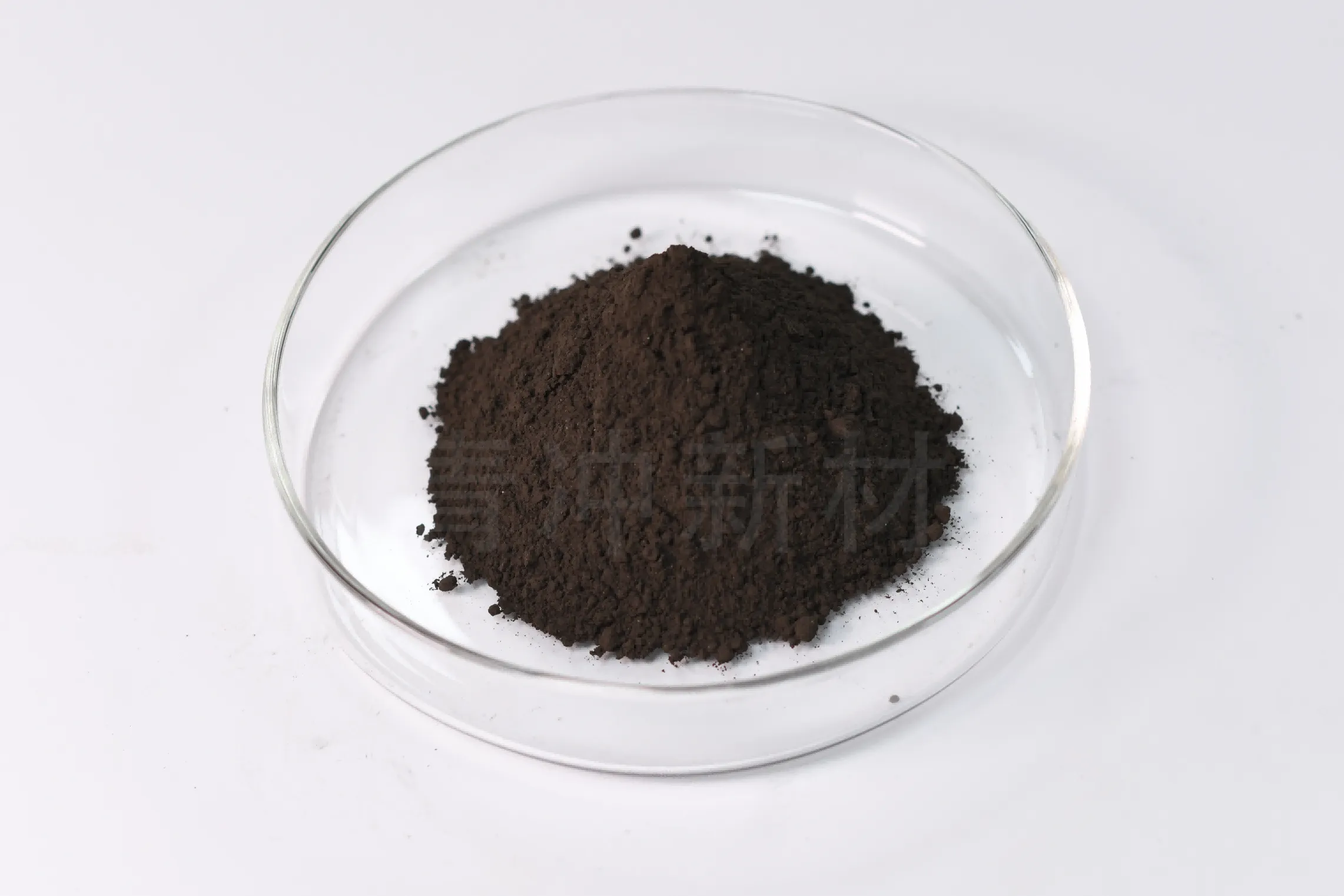
manganese monoxide
Calculate Cost per Kilogram of Usable Manganese
Begin with landed price, including freight, duty, inspection, financing, storage losses, and difficult dosing or segregation. Divide by the guaranteed elemental manganese fraction. At USD 700 per metric ton and 46% Mn, contained Mn costs about USD 1.52/kg before a bioavailability adjustment. At USD 600 per ton and 32% Mn, it costs about USD 1.88/kg.
Contained manganese is still not the final economic measure. If a formulation team uses a validated relative-bioavailability factor, the comparison becomes: landed cost divided by elemental-Mn fraction and the accepted availability factor. This is a decision model, not a universal nutrient credit. The factor should come from data relevant to the species, basal diet, source, and response criterion.
- Compare guaranteed Mn on an as-is basis and confirm the moisture basis.
- Apply the same delivered-cost boundary to both quotations.
- Model overage, premix loss, and rejected-lot risk separately.
- Run sensitivity cases instead of treating one bioavailability number as permanent.
Bioavailability: Sulfate Is the Stronger Reference Point
A direct 1986 broiler-chick study compared reagent-grade manganese sulfate with manganese monoxide at conventional dietary levels. Tissue uptake increased with added manganese, and MnO averaged 66% of the availability of manganese sulfate across the study's regression methods. Growth and feed conversion did not differ among treatments, which also shows why performance alone may be too insensitive for source qualification.
A 1989 chick study found substantial variation among feed-grade oxides. Relative values depended on the oxide and whether bone or kidney manganese was used as the endpoint; bone-based estimates ranged from about 70% to 93% of manganese sulfate, while kidney-based estimates were lower for several products. These studies are old and species-specific, but their procurement lesson remains useful: the label 'MnO' does not guarantee one bioavailability value. Mineralogy, Mn content, particle properties, impurities, diet chemistry, and the selected biomarker all matter.
Use sulfate as a practical benchmark and qualify each oxide grade instead of assigning a blanket discount. Account for dietary antagonists when interpreting trial results.
Stability and Premix Behavior
MnO's low water solubility limits the immediate release of manganese ions in dry premixes. That can be helpful when vitamins, fats, enzymes, or other oxidation-sensitive ingredients share a concentrated package. It does not make MnO inert: moisture, acidity, particle size, contact time, and contaminant metals can still change reactivity. Fine oxide powder can also create dust and segregation problems if bulk density and particle-size distribution do not match the carrier.
Manganese sulfate dissolves readily and can distribute efficiently after ingestion, but the same solubility deserves attention during storage and premixing. Hygroscopic exposure or localized moisture increases caking and ion mobility. In a vitamin-trace-mineral premix, released metal ions may accelerate oxidation, so many manufacturers separate sensitive vitamins from inorganic minerals or use carriers, coatings, antioxidants, shorter storage periods, and moisture-barrier packaging.
Pelleting does not produce one universal winner. Validate retention and flow under the mill's conditioning temperature, steam, fat addition, and storage humidity. Check caking, vitamin retention where relevant, and manganese uniformity before a plant-scale run.

Manganese Sulfate
Regulatory Comparison: European Union and United States
Regulatory acceptance attaches to a defined substance, composition, use condition, and compliant feed operation, not to a chemical name alone. Verify current destination-market rules and any additional registration, labeling, or import requirements.
| Market | MnO | Manganese sulfate |
|---|---|---|
| European Union | Authorized as 3b502 for all animal species; at least 60% Mn and 77.5% MnO, no more than 2% MnO2 | Authorized as 3b503 for all animal species; at least 95% MnSO4.H2O and 31% Mn |
| EU use limits | Total Mn in complete feed: 100 mg/kg for fish and 150 mg/kg for other species | The same total-Mn limits apply |
| United States | Manganous oxide appears in 21 CFR 582.80 and 582.5464 as GRAS under good feeding practice | Manganese sulfate appears in 21 CFR 582.80 and 582.5461 as GRAS under good feeding practice |
| Buyer implication | Confirm feed-grade identity, composition, contaminants, labeling, and mill controls | Confirm the hydrate, assay basis, contaminants, labeling, and mill controls |
The EU authorization requires both sources to be incorporated through a premixture and includes worker-protection provisions for inhalation, skin, and eye exposure, especially where heavy metals such as nickel are relevant. Its current authorization period runs to 11 September 2027, so EU buyers should recheck status before contracts extending beyond that date. In the United States, GRAS status under good feeding practice does not replace state feed rules, ingredient definitions, labeling, or the feed manufacturer's hazard controls.
When Each Source Makes Better Commercial Sense
Some mills use different sources across species, premix formats, or customer programs. That is a rational outcome when decisions are based on validated economics rather than a company-wide preference for one salt.
MnO is often the better candidate when:
- high guaranteed elemental Mn reduces freight, storage, and inclusion mass;
- lower water solubility supports the chosen premix stability strategy;
- the specific grade has acceptable bioavailability data and uniformity; and
- its assay and contaminant profile meet the destination-market definition.
Manganese sulfate is often the better candidate when:
- the nutrition team prefers the conventional soluble reference source;
- the formulation values predictable dissolution more than maximum Mn density;
- the plant can control moisture and separate reactive minerals from sensitive vitamins; and
- the monohydrate assay, particle size, and insoluble matter are tightly controlled.
FAQs
Is MnO always cheaper than manganese sulfate per unit of manganese?
No. MnO often carries more elemental Mn, but the answer changes with landed price, actual assay, accepted bioavailability, dosing losses, testing, rejected-lot risk, and premix handling. Compare cost per kilogram of usable Mn, then test the sensitivity of the result.
Does greater solubility mean manganese sulfate is always more bioavailable?
No. Solubility supports dissolution, but animal response also depends on species, diet, dose, source quality, particle properties, and the endpoint measured. Sulfate is a useful benchmark; it is not proof that every sulfate lot will outperform every oxide lot in every formulation.
Can QingChong's displayed MnO grade be purchased directly for EU feed use?
Not on the product-page figures alone. The displayed 46% Mn specification does not meet the EU 3b502 minimum of 60% Mn. Request the exact EU-compliant feed grade, supporting documents, batch COA, contaminant results, and confirmation from the responsible regulatory team before purchase.
What is the fastest way to compare supplier quotations?
Normalize every quote to delivered cost per kilogram of guaranteed elemental Mn. Then add an agreed availability scenario and the expected costs of testing, premix protection, inventory, and nonconforming material. This exposes low bag prices that transfer risk downstream.
The Practical Decision
MnO can win on nutrient density and dry-premix compatibility; manganese sulfate can win on conventional nutritional benchmarking and rapid dissolution. Neither wins by chemical name. The defensible choice is the grade that meets the destination regulation, carries a controlled contaminant profile, performs in the actual formula, and delivers the required available manganese at the lowest verified total cost.
Request a Feed-Grade Specification Review
Send QingChong your destination market, species, annual volume, target Mn contribution, premix format, and contaminant limits. Ask for matching MnO and manganese sulfate grades, current documentation, representative COAs, samples, and delivered quotations so the comparison can be made on one technical and commercial basis.