EN
EN
 CN
CN
 fr
fr es
es ar
ar ru
ru de
de pt
pt tr
tr vi
vi it
it ja
ja ko
ko hi
hi

Manganese Sand Backwashing vs. Regeneration: Are They the Same?
The short answer: no
Backwashing and regeneration are related maintenance actions, but they solve different problems. Backwashing is a hydraulic cleaning step: it reverses the service flow, expands or agitates the media bed, and carries out accumulated iron precipitates, manganese solids, suspended matter, and fines. Regeneration is a chemical or process step that restores the media's ability to participate in the oxidation and filtration cycle. A bed can be physically clean and still have reduced chemical activity; it can also have active surfaces that are buried under solids and need washing before they can work properly.
That distinction matters when a filter shows higher outlet manganese, shorter runs, rising differential pressure, or repeated start-up turbidity. Treating every symptom as a backwash problem can increase water use without recovering performance; adding oxidant to a fouled bed raises chemical use while the restriction remains.
What backwashing actually changes
During service, water moves through the bed and the media retains oxidized particles. In a manganese sand filter, the grains provide contact surfaces and voids where iron and manganese reaction products can be captured. As loading builds, the voids become less open, the pressure drop increases, and water distribution becomes less uniform. Localized compaction can create mudballs or preferential channels. These are physical conditions, so the first remedy is usually physical cleaning.
- The control valve switches the vessel from service to waste and sends water upward through the underdrain.
- The upward flow reduces the effective weight of the grains and creates controlled bed movement; the target movement must match the media, temperature, vessel freeboard, and underdrain design.
- Grain-to-grain movement and water shear loosen deposits that have attached to or settled between particles.
- The waste stream carries loosened solids away before the bed is rinsed and returned to service.
A successful backwash improves permeability and flow distribution. It does not rebuild a depleted manganese dioxide surface or correct raw-water chemistry. Rate and duration must come from the media and vessel design; a copied number can under-expand the bed, wash media out, or disturb support gravel.
What regeneration is intended to restore
Regeneration addresses chemical condition rather than accumulated dirt. In systems that rely on an oxidizing manganese dioxide surface, the active surface can be consumed, reduced, masked by competing contaminants, or otherwise moved away from the condition required for iron and manganese removal. A regeneration step supplies a defined oxidizing environment or another approved process condition so the media can return to its intended working state.
The route depends on the media formulation and treatment process. Some greensand-type systems use potassium permanganate or chlorine, continuously or intermittently. Other manganese dioxide media rely on upstream aeration or another oxidation arrangement. Never dose a familiar chemical without checking grade, compatibility, residual requirements, and discharge.
| Question | Backwashing | Regeneration |
|---|---|---|
| Primary job | Remove deposited solids and restore hydraulic openness | Restore the chemical or oxidative working condition of the media |
| Main mechanism | Water flow, bed movement, shear, and waste discharge | A media-specific oxidant or process condition |
| Typical evidence | High differential pressure, shortened run, dirty waste water, uneven flow | Breakthrough after adequate cleaning, weak oxidation response, or supplier-defined exhaustion signal |
| Main risk if misapplied | Poor cleaning, channeling, media loss, or support-layer disturbance | Chemical overfeed, residual carryover, media damage, or an invalid process assumption |
When cleaning alone is not enough
The most useful field question is not “Has the filter been backwashed?” but “What changed after a correctly executed backwash?” If differential pressure falls and waste water clears, yet soluble manganese or iron still breaks through earlier than the design basis, the bed may be clean but chemically under-conditioned. That is the point at which a project team should investigate regeneration or the upstream oxidation step.
- Outlet quality remains poor after the bed has been washed, settled, and rinsed, while hydraulic resistance returns close to its clean baseline.
- The system has adequate contact time and distribution, but the oxidation-reduction condition or chemical dose is outside the approved operating window.
- A media supplier or process engineer identifies an exhausted or altered active surface through site data, sampling, or a defined qualification test.
- The raw-water composition has changed: higher iron or manganese loading, sulfide, organics, oil, or another contaminant may be consuming or masking the active surface.
These signals do not prove regeneration is required; they separate hydraulic diagnosis from chemical diagnosis. Check iron and manganese forms, oxidant residual, pH, alkalinity, contact time, pressure profile, valve sequence, and media depth. Poor distribution can make chemical treatment appear ineffective because water bypasses parts of the bed.
Choose a regeneration route only after process confirmation
Regeneration is not a generic maintenance button. Before selecting a chemical or cycle, confirm five items with the equipment designer and media supplier: the exact media grade; whether the active function is intrinsic to the grains or depends on a coating or conditioning step; the approved oxidant and concentration range; the required contact, rinse, and waste-handling sequence; and the acceptance test for returning to service. Keep chemical safety, residual disposal, and downstream compatibility in the same review.
Distinguish continuous regeneration from a recovery event. Continuous oxidation may maintain chemical condition but does not remove solids; an intermittent recovery cycle may restore activity but does not replace cleaning. Even when automated together, controls should show separate steps, alarms, and records.
Do not publish or copy a fixed potassium permanganate dose, soak time, pH limit, or regeneration frequency unless it is tied to the specific product and process. Public guidance and supplier literature describe different media families and operating philosophies. For a new project, a jar test, pilot run, or supplier-reviewed commissioning protocol is more defensible than a number borrowed from a domestic softener manual.
A decision sequence for operators and EPC teams
- Record the symptom: differential pressure, outlet iron/manganese, turbidity, run length, valve status, and recent raw-water changes.
- Run the approved backwash and rinse sequence, then verify whether pressure and hydraulic behavior return toward the clean baseline.
- If hydraulics recover but removal does not, review oxidation conditions and ask whether the media has a supplier-defined regeneration requirement.
- If neither hydraulics nor removal recover, investigate flow distribution, underdrain condition, media loss, bed depth, fouling type, and instrument accuracy before adding chemicals.
- Document the decision and obtain written confirmation for any new oxidant, concentration, contact time, or waste route.
This sequence prevents a common operating error: using chemical regeneration to compensate for an incorrectly sized backwash, or using repeated backwashing to compensate for an exhausted active surface. EPA filter guidance identifies head loss, turbidity, and operating time as useful inputs for filter-cycle decisions, but the trigger values still belong to the individual design and commissioning record.
How to confirm the right maintenance plan for your manganese sand
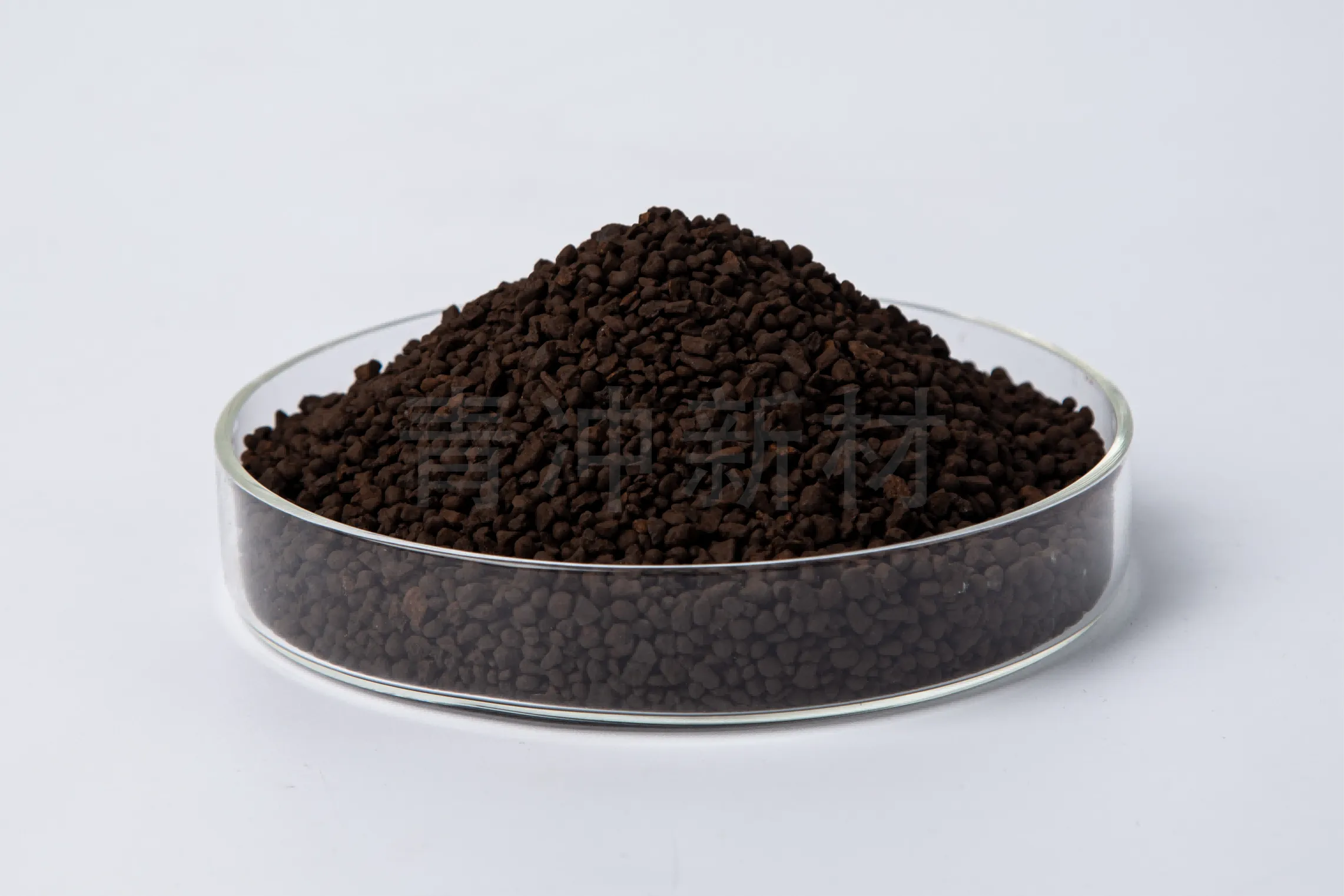
QingChong’s manganese filter media is processed from natural manganese ore into black-brown granules for iron and manganese removal in water treatment. We can supply 0.5–1.0 mm, 1.0–2.0 mm, and customized particle sizes. For your project, however, media size is only one part of the maintenance decision: we need to review bed depth, influent chemistry, vessel hydraulics, and the oxidation route before confirming whether your process needs backwashing only or a separate regeneration step.
To help us review your grade and maintenance plan, send us your raw-water iron and manganese concentrations, pH, alkalinity, dissolved oxygen or oxidant data, flow rate, vessel diameter, bed depth, underdrain arrangement, operating temperature, and planned waste route. We can then help you confirm the service conditions, backwash window, whether the selected media is expected to need regeneration, and which acceptance tests you should use after commissioning. This gives you a process-fit decision instead of a generic media recommendation.
You can review our Manganese Filter Media product information and contact our technical team for a grade-specific discussion. Please include the operating data above so we can assess your backwash and regeneration requirements against your actual process.
FAQ
Can I regenerate manganese sand by backwashing it longer?
No. A longer water wash may improve solids removal, but it does not prove that the media's oxidative condition has been restored. Extend or modify a backwash only within the approved hydraulic window, and investigate regeneration separately when chemical performance remains weak.
Does every manganese filter media product need potassium permanganate?
No. Regeneration chemistry is media- and process-specific. Some greensand-type systems use potassium permanganate or chlorine, while other manganese dioxide media may rely on a different oxidation arrangement. Confirm the exact grade and supplier instructions before dosing.
What should I send when asking QingChong about regeneration?
Send the media grade or target application, raw-water analysis, vessel and underdrain data, flow and temperature, current backwash sequence, outlet results, and any oxidant already in use. Ask for a written recommendation covering backwash, regeneration, rinse, waste handling, and the acceptance test.