EN
EN
 CN
CN
 fr
fr es
es ar
ar ru
ru de
de pt
pt tr
tr vi
vi it
it ja
ja ko
ko hi
hi

Manganese Chloride Market Trends 2026: Demand Drivers Across Pharma, Ag, and Industry
In 2026, the manganese chloride market is getting more and more attention from international buyers across agriculture, animal nutrition, pharmaceuticals, and industrial manufacturing. Manganese chloride has been seen as a key manganese compound for a while, but now the whole market seems to be moving with a pretty complicated set of demand drivers, not like earlier years. For importers, formulators, and procurement teams, figuring out those changes really matters if they want to make smarter sourcing decisions, even when timelines feel tight.
Also, unlike bulk commodity chemicals that mostly follow price, manganese chloride is being pulled around by application specific needs. Buyers are not only asking “is supply there” anymore. They are starting to wonder if a supplier can actually provide the right grade, steady quality, clear paperwork, and export ready support, matched to the intended use.
So, that is why the manganese chloride market in 2026 is worth a closer look. From soluble agricultural mixtures to feed grade uses and a few chosen pharmaceutical or industrial scenarios, demand looks more segmented, more quality focused, and tied more directly to how the product performs once it reaches downstream operations.
Overview of Manganese Chloride Market Trends in 2026
In 2026, the manganese chloride market trends look like, demand isn't really moving in one clean direction for just one single reason. Rather, the market is being propped up by multiple end-use sectors at once, but each of them is operating on different expectations, so the overall feel stays mixed.
Some buyers seem to concentrate on the straightforward industrial intake side of things. Others are more tuned to micronutrient demand in agriculture or trace mineral use in feed materials. And in the higher value lanes—think pharmaceuticals and fine chemicals—quality levels plus documentation can start to matter even more than raw tonnage, or so it appears across several channels.
Several broad trends are shaping the market this year:
- stronger demand for application-specific grades
- rising attention to impurity control
- more focus on reliable export packaging and shipping
- increasing preference for consistent suppliers over spot-only traders
- more cautious procurement strategies due to cost and supply chain uncertainty
This means the manganese chloride market is becoming more segmented by application. The opportunity for suppliers is no longer just to sell product, but to support buyers with the right specification for the right use.
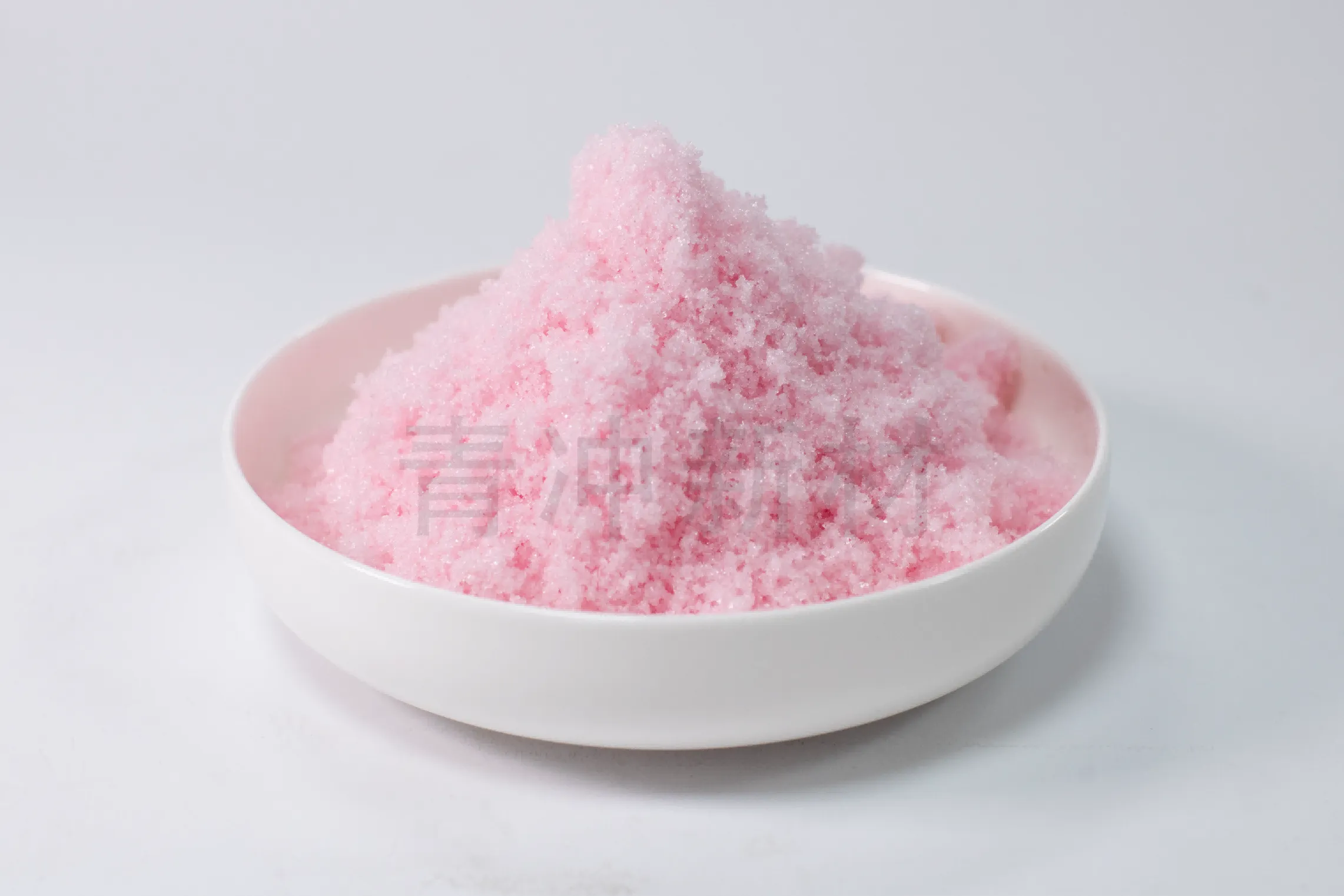
Demand Driver #1: Pharmaceutical and Fine Chemical Applications
One of the more interesting developments in 2026 is the role of pharmaceutical and fine chemical demand in shaping perceptions of manganese chloride supply quality.
In this segment, total volume may be smaller than in agriculture or feed, but value expectations are often higher. Buyers in pharmaceutical and fine chemical fields usually pay close attention to:
- purity level
- impurity profile
- batch consistency
- product documentation
- packaging integrity
- supplier communication
This demand doesn’t really have to create the biggest tonnage jump, but it sort of guides the market in a second key manner: it pushes suppliers toward a higher quality discipline. The manufacturers who can handle those more strict technical expectations may end up more favorably placed in global markets, particularly when buyers want consistent paperwork, such as COA, TDS, and MSDS.
A fresh way to view this trend is that the manganese chloride market is not simply growing by volume. It is becoming more layered by quality tier. As a result, suppliers that understand end-use differences are more likely to win serious B2B buyers.
Demand Driver #2: Agriculture and Micronutrient Fertilizers
Agriculture remains one of the most important sectors backing manganese chloride demand. Manganese is a necessary trace element for crops, and the appetite for soluble manganese sources keeps being connected to how well crop nutrition works, deficiency correction timing, and the further evolution of specialty fertilizer development.
In 2026, agricultural demand is being supported by several factors:
- greater interest in micronutrient-enriched fertilizers
- ongoing need to address manganese deficiency in soils
- expansion of foliar and water-soluble fertilizer systems
- stronger focus on crop quality and nutrient efficiency
Manganese chloride has value in agriculture because of its solubility and usefulness in selected formulations. However, it is not automatically the first choice in every fertilizer system. Buyers often evaluate whether chloride contribution is acceptable for the target crop and whether the material fits the broader formulation.
This is especially important for:
- specialty crops
- foliar nutrient products
- liquid fertilizer systems
- chloride-sensitive crop programs
The agricultural outlook for 2026 is not just about larger fertilizer consumption. It is also about more precision-oriented nutrient use. That favors suppliers who can provide consistent product quality and help customers match the manganese source to the intended agronomic application.
Demand Driver #3: Animal Feed and Trace Mineral Nutrition
Animal feed is another big thing in the manganese chloride market. Manganese helps with bone growth, metabolism, enzyme action, and reproductive performance in both livestock and poultry. Because of that, manganese compounds stay pretty relevant within trace mineral premixes, and they end up in feed formulations as well.
From a market perspective, feed demand is often less dramatic than some industrial sectors, but it offers something very valuable: stable baseline consumption.
Feed buyers in 2026 are paying attention to several practical concerns:
- feed-grade suitability
- heavy metal limits
- moisture control
- flowability
- packaging quality
- regulatory acceptance
- supply reliability
In this case, buyers in the industry face the dilemma of trying to simultaneously achieve the twin objectives of price control and safety when sourcing the manganese. The buyers would want competitive prices and, at the same time, be sure that the manganese source can deliver quality without causing any issues.
This is one of the reasons why an exporter with experience in handling such transactions could have a competitive edge over any opportunist supplier.
Demand Driver #4: Industrial and Chemical Manufacturing
Manufacturing industries and chemical production will continue to drive demand for manganese chloride in 2026, depending on applications requiring properties such as solubility, reactivity, or behavior in the manufacturing process.
The use of manganese chloride in these sectors depends on its application, such as being employed in:
- chemical synthesis
- laboratory reagents
- specialty formulations
- process chemistry
- selected catalyst or intermediate systems
Manufacturing demand will depend on overall manufacturing activity; however, it will also rely on an interesting phenomenon: buyers within the sector have begun to reassess their sources of supply for raw materials, looking to increase their procurement agility. The implications for manganese chloride are significant in terms of quality, reliable service, and exportability.
An appropriate way to think about this is in terms of manufacturing markets, where supplier performance counts as part of the product’s value.
Regional and Global Sourcing Trends Shaping the Market
The international sourcing environment for manganese chloride is also changing. Global buyers are more selective than before, and many now expect suppliers to provide more than basic availability.
In 2026, overseas customers commonly look for:
- stable specification
- application-grade supply
- dependable lead times
- export-standard packaging
- complete documentation
- responsive communication
- traceable production capability
China remains an important manufacturing base for manganese compounds, including manganese chloride and manganese sulfate. For international buyers, Chinese suppliers can offer scale, product variety, and cost competitiveness. However, buyers are increasingly aware that not every supplier has the same level of export experience.
This has led to a more cautious sourcing mindset. Importers are paying more attention to:
- whether a supplier understands their application
- whether batches remain consistent
- whether the supplier can handle long-distance shipping requirements
- whether technical documents are complete and accurate
As a result, the 2026 market is not only about buying chemicals. It is about building a lower-risk supply chain.
Price Trend Factors in the Manganese Chloride Market
Price remains a major concern for buyers, but manganese chloride pricing in 2026 should be viewed in context. Market quotations can be affected by:
- manganese raw material costs
- energy and manufacturing expenses
- environmental compliance costs
- grade and purity requirements
- packaging type
- international freight
- order quantity
- delivery terms
For professional buyers, the most important point is that the lowest quote is not always the best sourcing value. A lower-priced material may create extra cost if it has inconsistent assay, poor packaging, higher rejection risk, or lower suitability for the intended application.
This is especially true in higher-specification markets such as pharma-related use, feed-grade supply, or precision agricultural formulations. In these sectors, specification-adjusted value matters more than headline price alone.
What Global Buyers Should Look for in a Manganese Chloride Supplier
When evaluating a manganese chloride supplier in 2026, global buyers should go beyond basic pricing and ask more detailed questions.
A strong supplier should offer:
- clear and consistent product specifications
- quality suited to the intended application
- COA, TDS, and MSDS support
- export-ready packaging
- stable batch-to-batch performance
- responsive communication
- experience with international shipments
- ability to support agriculture, feed, chemical, or industrial customers
This is especially important for buyers who look for long-term cooperation instead of a one-time spot buying. A solid manganese compound exporter should be able to talk through the differences between grades, help clients figure out how well it matches their intended use, and support a smoother procurement schedule and planning.
And for the companies that are sourcing manganese chloride along with other manganese salts, working with a supplier that covers a wider manganese product range can also make things easier for purchase flow and technical evaluation at the same time.
Conclusion: What the 2026 Manganese Chloride Market Means for Buyers
The trends in the manganese chloride market for 2026 indicate that demand is influenced by various sectors instead of one leading industry. Pharmaceuticals and specialized chemicals are placing greater emphasis on the necessity of high-quality, documentation-ready supply. Agriculture maintains demand by utilizing soluble micronutrient applications. Feed ensures a consistent consumption base, whereas industrial manufacturing introduces flexibility and a wider demand for processes.
The key point for purchasers is that manganese chloride can no longer be regarded merely as a basic bulk chemical. It is becoming more of a use-case-focused product, and sourcing choices should mirror that truth.
International importers and industrial users should assess manganese chloride based on application suitability, quality uniformity, documentation, and supplier dependability, rather than solely on price. In a more divided and quality-focused market, these elements are what genuinely uphold long-term value.
If your company seeks export-ready manganese compounds, technical details, or bulk supply assistance for agricultural, feed, pharmaceutical, or industrial applications, selecting the appropriate supplier can significantly impact both procurement efficiency and product effectiveness.
Contact Qingchong New Materials, get your reliable supplier
FAQs
1. What is driving manganese chloride market growth in 2026?
Growth is being supported by multiple sectors, especially agriculture, animal feed, industrial processing, and selected pharmaceutical or fine chemical applications. The market is becoming more diversified and application-driven.
2. Is manganese chloride mainly used in fertilizers?
No. While manganese chloride is used in fertilizers and soluble micronutrient systems, it is also used in feed, laboratory work, chemical manufacturing, and selected industrial processes.
3. Why are buyers paying more attention to supplier quality?
Because international buyers increasingly need stable specifications, documentation, packaging reliability, and application-specific suitability. Quality consistency now plays a bigger role in procurement decisions.
4. How is manganese chloride different from manganese sulfate in market demand?
Manganese sulfate is often more common in many fertilizer and feed markets, while manganese chloride can offer advantages in specific soluble, reactive, or process-sensitive applications. Demand depends on end-use priorities.
5. What should importers check before ordering manganese chloride?
Importers should review product grade, purity, impurity profile, documentation, packaging, export experience, and how well the material fits the intended application.