EN
EN
 CN
CN
 fr
fr es
es ar
ar ru
ru de
de pt
pt tr
tr vi
vi it
it ja
ja ko
ko hi
hi

Industrial Grade Manganese Carbonate for Sale: Specs and Applications
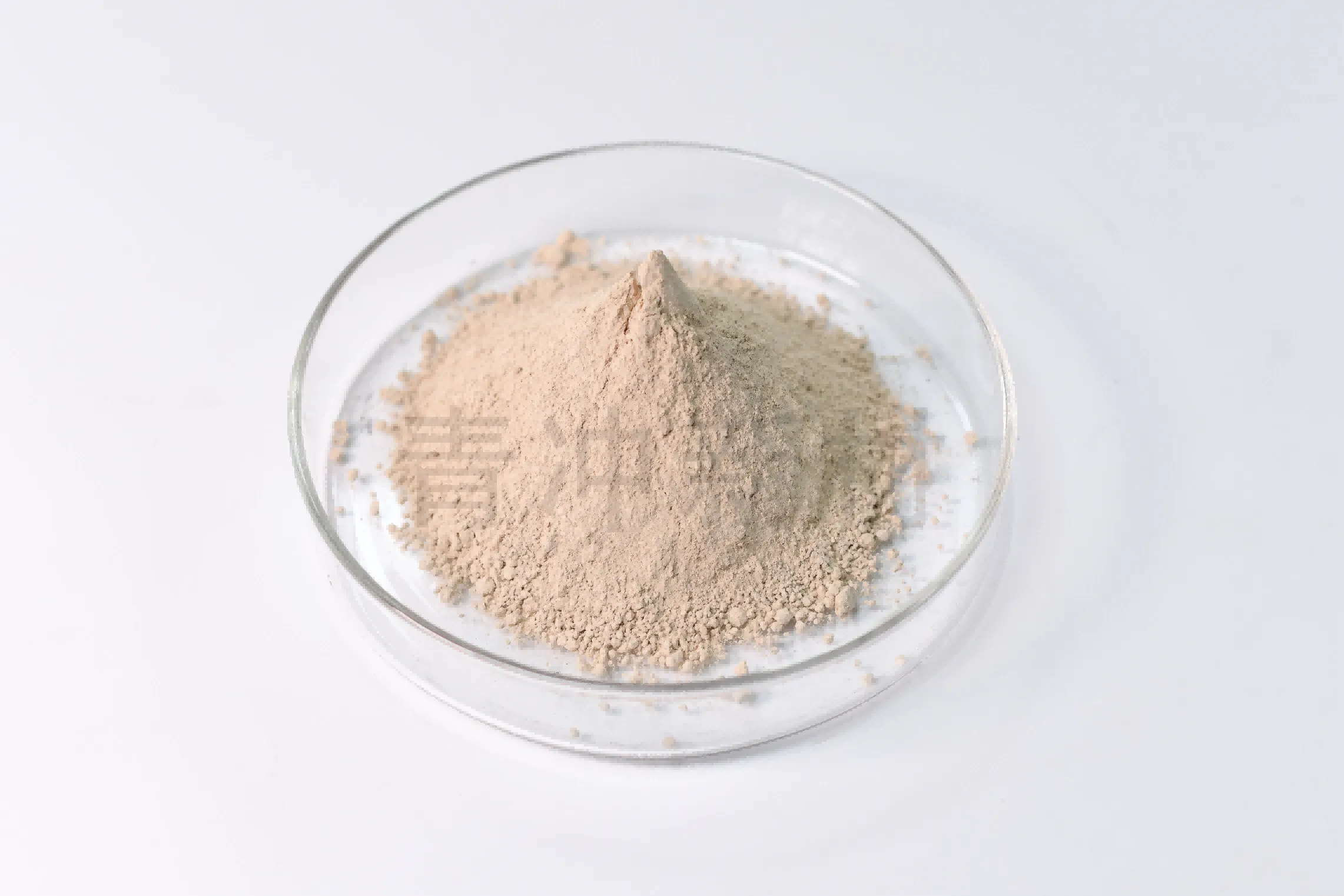
Manganese carbonate operates in electric vehicle batteries, agricultural soil science, and advanced ceramics. Yet, the industry rarely discusses this critical intermediate. This compound features the chemical formula MnCO₃. It appears as a light brown powder. It naturally occurs as the mineral rhodochrosite. However, manufacturers produce it commercially to achieve high industrial precision. Are you searching for industrial grade manganese carbonate for sale? This guide provides technical buyers with the exact specifications, performance data, and application contexts required for procurement. You will gain the exact knowledge needed to make informed sourcing decisions.
What Is Industrial Grade Manganese Carbonate?
Before purchasing, you must establish the technical baseline. This knowledge distinguishes the industrial grade from reagent or food grades. The chemical formula is MnCO₃. It possesses a molecular weight of 114.95 g/mol and holds the CAS number 598-62-9. Commercial manganese carbonate is synthesized primarily through precipitation from manganese sulfate solutions. This synthetic grade completely dominates industrial supply chains because it offers superior purity control compared to mined rhodochrosite.
| Grade | Mn Content | Typical Use |
|---|---|---|
| Industrial | 42–47% | Ceramics, ferrites, feeds |
| Battery | 44.5%+ | Cathode precursors |
| Fertilizer/Feed | 43%+ | Micronutrient applications |
Knowing what the compound is matters less than knowing what it can do at specification.

Technical Specifications: The Buyer's Reference Sheet
Procurement managers and engineering readers require exact specifications to build export credibility.
Standard Physical & Chemical Properties
- Quality control teams measure the Mn content (%), the maximum Fe content, and the presence of water-soluble substances.
- Regulatory compliance demands strict limits on heavy metals like lead (Pb), arsenic (As), and cadmium (Cd).
- Physical parameters evaluate moisture content and bulk density.
- Particle size is strictly measured using D50 and D90 mesh options.
- Laboratories also check the pH of the aqueous suspension and the loss on ignition (LOI).
Packaging & Handling Specs
- Standard export packaging utilizes 25 kg kraft bags or 1MT jumbo bags (FIBC).
- Warehouse workers must store the product in dry, ventilated conditions away from acids and oxidizers.
- Proper storage ensures an extended shelf life.
- Export shipments must include a GHS-formatted Safety Data Sheet (SDS).
- The standard HS code used for customs clearance is 2836.99.
Quality Certifications to Look For
- Buyers should verify ISO 9001 manufacturing compliance.
- Reliable suppliers provide independent SGS or Intertek third-party test reports.
- European buyers absolutely require REACH compliance.
- Every batch must arrive with a detailed Certificate of Analysis (COA).
Buyer's Tip: Always request a COA alongside the SGS report. The manganese percentage alone does not tell the full story. You must insist on reviewing iron, lead, and moisture figures before approving any shipment.
Industrial Applications: Where MnCO₃ Does Its Real Work
Ceramics & Glazes
The ceramics industry serves as the main market for materials used in this industry. The compound acts as a strong colorant, which produces brown and black colors while also functioning as a fluxing agent. Formulators prefer it over manganese dioxide (MnO₂) because its decomposition pattern and gas emission rate remain constant during the entire process. The ceramic engineers use different loading ratios to achieve their desired firing temperature and surface finishing results. The main buyer segment includes tile producers, sanitaryware manufacturers, and art ceramics exporters located in Southeast Asia, Europe, and the Middle East.
Ferrite & Magnetic Materials Manufacturing
Electronics manufacturers use the compound as a precursor for manganese-zinc (MnZn) ferrites. The ferrites function inside transformers, inductors, and EMI suppression cores. The production process requires high-purity materials, which face contamination from iron (Fe) during this stage. China, Japan, South Korea, and Germany function as the primary manufacturing centers for electronics components, which serve this buyer segment.
Battery Materials & Energy Storage
The energy storage sector represents the fastest-growing market segment. The compound acts as a crucial precursor in Electrolytic Manganese Dioxide (EMD) and NMC cathode chemistry pathways. The material shows increasing importance for the development of lithium-manganese-iron-phosphate (LMFP) batteries. The particular market segment requires manufacturers to maintain strict control over their particle size distribution while achieving extremely low sulfate waste. The demand for battery materials originates from production facilities in China and the USA, and the European Union supply chain of electric vehicles.
Animal Feed & Agriculture
Manganese functions as an essential trace element in biology. It supports bone formation, enzyme activation, and reproductive health of livestock. Formulators frequently compare manganese carbonate to manganese sulfate regarding bioavailability and EU or AAFCO regulatory acceptance. Agronomists also apply it as a soil amendment in manganese-deficient agricultural zones. Animal nutrition companies and fertilizer blenders in Latin America, Southeast Asia, and Africa form this buyer segment.
Chemical Synthesis & Catalyst Applications
Chemists utilize it to synthesize other manganese compounds like MnO, Mn₂O₃, and MnO₂ through controlled calcination. It also functions effectively as a catalyst or co-catalyst in complex organic synthesis. Fine chemical producers and petrochemical companies typically purchase for this purpose.
Water Treatment
Water treatment stands as a rapidly emerging application. Treatment facilities use it to remove hydrogen sulfide and iron from water through targeted oxidation chemistry. It offers a strong comparative advantage over competing agents in pH-sensitive environments. Municipal water utilities and industrial effluent treatment operators make up this buyer base.
Why Sourcing Grade Consistency Matters
Specification drift carries hidden, expensive costs. A reliable supplier differs significantly from a simple commodity trader. Manganese variance causes severe real-world failures. Ceramics suffer from color inconsistency. Ferrites face complete magnetic permeability failures. Feed products experience dangerous nutritional shortfalls. Low-Fe specification failures in ferrite manufacturing incur massive financial costs. Furthermore, the term "industrial grade" means different things across exporting countries. Buyers must evaluate suppliers based on batch-to-batch COA consistency and third-party verification. Flexible minimum orders and reliable lead times also demonstrate true supplier quality. Our company implicitly frames our stringent quality control processes around these exact factual benchmarks.
How to Buy Industrial Grade Manganese Carbonate
This practical sourcing guide simplifies international procurement. Follow this step-by-step purchasing pathway:
- Define your specific application and identify your required Mn% threshold.
- Specify your required particle size and packaging format.
- Request SGS-verified COA samples before placing any bulk order.
- Confirm the correct HS code and verify import duties for your specific country.
- Negotiate the MOQ, lead time, and Incoterms, noting that FOB and CIF are the most common for export.
Conclusion
Industrial-grade manganese carbonate operates as a precision intermediate, not a generic commodity. Its true value depends entirely on specification integrity and supply chain reliability. This guide empowers international buyers to source with total specification confidence. If you are evaluating MnCO₃ suppliers for a specific application, our technical team provides unmatched service. We deliver application-matched grade recommendations, and highly competitive export pricing. Secure your material supply by visiting our Manganese Carbonate product page. If you want to know more about us, visit our website: Qingchong New Materials
FAQs
1. What is the typical Mn content of industrial grade MnCO₃?
Industrial grade manganese carbonate typically contains between 42% and 47% manganese.
2. Is manganese carbonate hazardous to ship internationally?
Manganese carbonate generally ships safely under standard conditions. However, the shipment requires a GHS-formatted Safety Data Sheet (SDS) and handlers must keep the material away from acids and oxidizers.
3. What's the standard lead time for bulk export orders?
Standard lead times depend entirely on the supplier's reliability and the specific order volume. Buyers should negotiate and confirm lead times before finalizing any export contract.
4. Can I request a custom particle size or packaging format?
Yes, qualified suppliers allow buyers to specify custom particle sizes using D50 and D90 metrics. Buyers can also select packaging formats like 25 kg kraft bags or 1MT jumbo bags based on their handling capabilities.
5. What is the correct customs classification code for this material?
The standard Harmonized System (HS) code used globally for customs clearance is 2836.99.