EN
EN
 CN
CN
 fr
fr es
es ar
ar ru
ru de
de pt
pt tr
tr vi
vi it
it ja
ja ko
ko hi
hi

How Mn₃O₄ Powers Soft Ferrite Production: A Technical Guide for Electronics Manufacturers
Soft ferrite properties actually start well before a core is even formed through pressing, sintering, grinding, and testing. In the case of MnZn ferrite cores, beads, inductors, transformers, and EMI products made by electronics manufacturers, manganese tetroxide (Mn₃O₄) is a crucial raw material that determines, right at the outset, whether it will be possible to achieve the necessary magnetic, electrical, and physical specifications.
This guide will cover what makes manganese tetroxide Mn₃O₄ important in soft ferrite manufacture, the key properties to consider, potential sources of quality problems in the process, and what factors need to be considered when choosing a Mn₃O₄ provider for electronics manufacturing purposes.
Why Mn₃O₄ Matters in Soft Ferrite Manufacturing
Soft ferrites refer to ceramic magnetic materials formed by a compound of iron oxide with other metal oxides. The manganese in the case of manganese zinc ferrite is one of the ingredients forming part of the spinel ferrite and influencing factors such as permeability, saturation, Curie point, resistivity, core losses, and processing stability. Changes in the manganese precursor are bound to translate to variations in terms of calcining characteristics, shrinking, growth of crystals, density, and magnetic properties of the final ferrite.
The popularity of Mn₃O₄ in ferrite production arises from the fact that this material provides a manganese oxide entry point to MnZn ferrite formulations. As opposed to other manganese-containing materials, a well-specified Mn₃O₄ material allows for predictable processing stages that include mixing, calcining, and sintering. This is especially important where the end product is required to operate under conditions present within switching power supplies, common-mode chokes, signal transformers, line filters, current sensors, and wireless charging components among other miniaturized electronic assemblies.
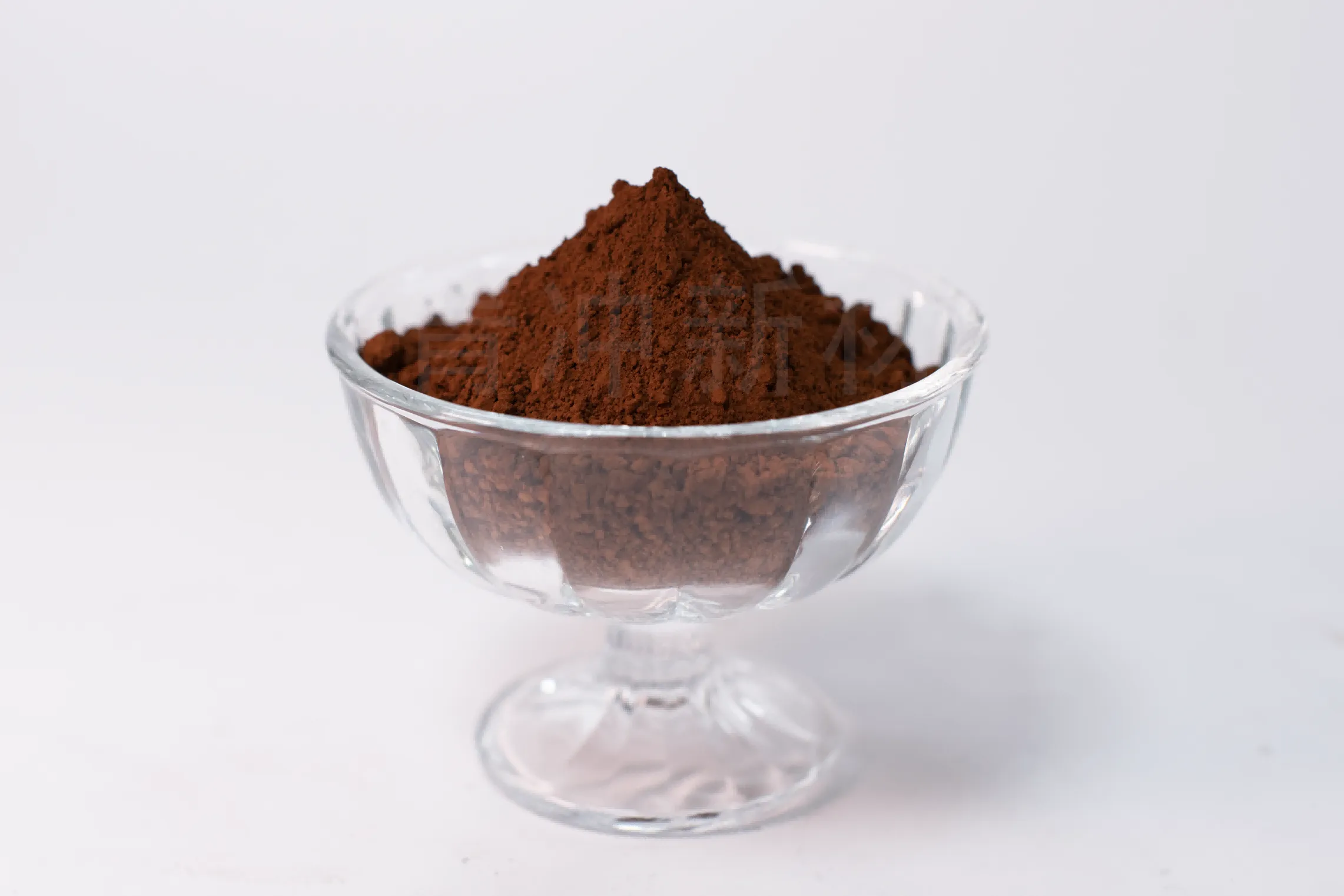
QingChong's manganese tetroxide (Mn₃O₄) is one source of a well-specified manganese raw material required for electronic and magnetic materials applications.
The Role of Mn₃O₄ in MnZn Ferrite Chemistry
A typical MnZn ferrite production route uses metal oxides or carbonate precursors that are weighed, mixed, milled, calcined, granulated, pressed, sintered, and finished. Mn₃O₄ supplies manganese into this oxide system. During thermal processing, the manganese oxide participates in phase formation with iron oxide and zinc oxide, helping form the spinel ferrite structure that gives soft ferrite its magnetic behavior.
The value of Mn₃O₄ is not just its formula. In production, the powder must disperse evenly with Fe₂O₃, ZnO, and any dopants or process additives. If the manganese source is chemically inconsistent or physically difficult to mill, the ferrite batch may need more corrective processing. That can increase energy use, lengthen milling time, raise scrap risk, or create lot-to-lot magnetic drift.
Key Mn₃O₄ Specifications Electronics Manufacturers Should Review
Typical Mn₃O₄ Specification Points for Soft Ferrite Buyers
| Parameter | Why it matters in ferrite production | Buyer review point |
|---|---|---|
| Mn content | Controls manganese input into the ferrite formula and affects stoichiometry. | Confirm minimum Mn level and request COA data for each batch. |
| Fe₂O₃ level | May influence iron balance and formula correction. | Check whether impurity or contribution assumptions match your recipe. |
| Al₂O₃, CaO, MgO, SiO₂, Na₂O, S | Trace oxides and elements can affect sintering, grain growth, loss behavior, and electrical properties. | Set internal limits based on your ferrite grade and failure history. |
| Moisture | Adds weighing error and can affect storage, feeding, and granulation. | Verify moisture limits and inspect packaging integrity. |
| Particle size | Influences mixing efficiency, milling time, reaction uniformity, and sintering behavior. | Compare D50 and distribution against current process windows. |
| Tap, bulk, and true density | Affects feeding, handling, storage volume, and powder packing behavior. | Review values for equipment compatibility and inventory planning. |
| Specific surface area | Relates to reactivity, dispersion, and thermal response. | Track lot consistency, not only a single average value. |
Purity and Impurity Control: Small Numbers, Real Consequences
In soft ferrite production, impurity control is rarely glamorous, but it is where many quiet production problems begin. Calcium, magnesium, aluminum, silica, sodium, sulfur, and excess iron-bearing impurities may not look dramatic on a purchasing sheet, yet they can influence sintering, grain boundary behavior, resistivity, densification, and magnetic loss. For high-volume electronics manufacturing, the question is not only whether a batch passes a general industrial specification. The question is whether it stays inside the plant's own ferrite process window.
That is why ferrite manufacturers should treat Mn₃O₄ qualification as a joint engineering and sourcing decision. Procurement may compare price, lead time, packaging, and supplier capacity, while process engineers should compare batch COAs, pilot sintering behavior, fired density, initial permeability, core loss, DC bias behavior, and dimensional shrinkage. A lower-cost powder that forces longer milling, tighter sorting, or higher scrap may become expensive inside the furnace.
Particle Size, Milling, and Calcination Behavior
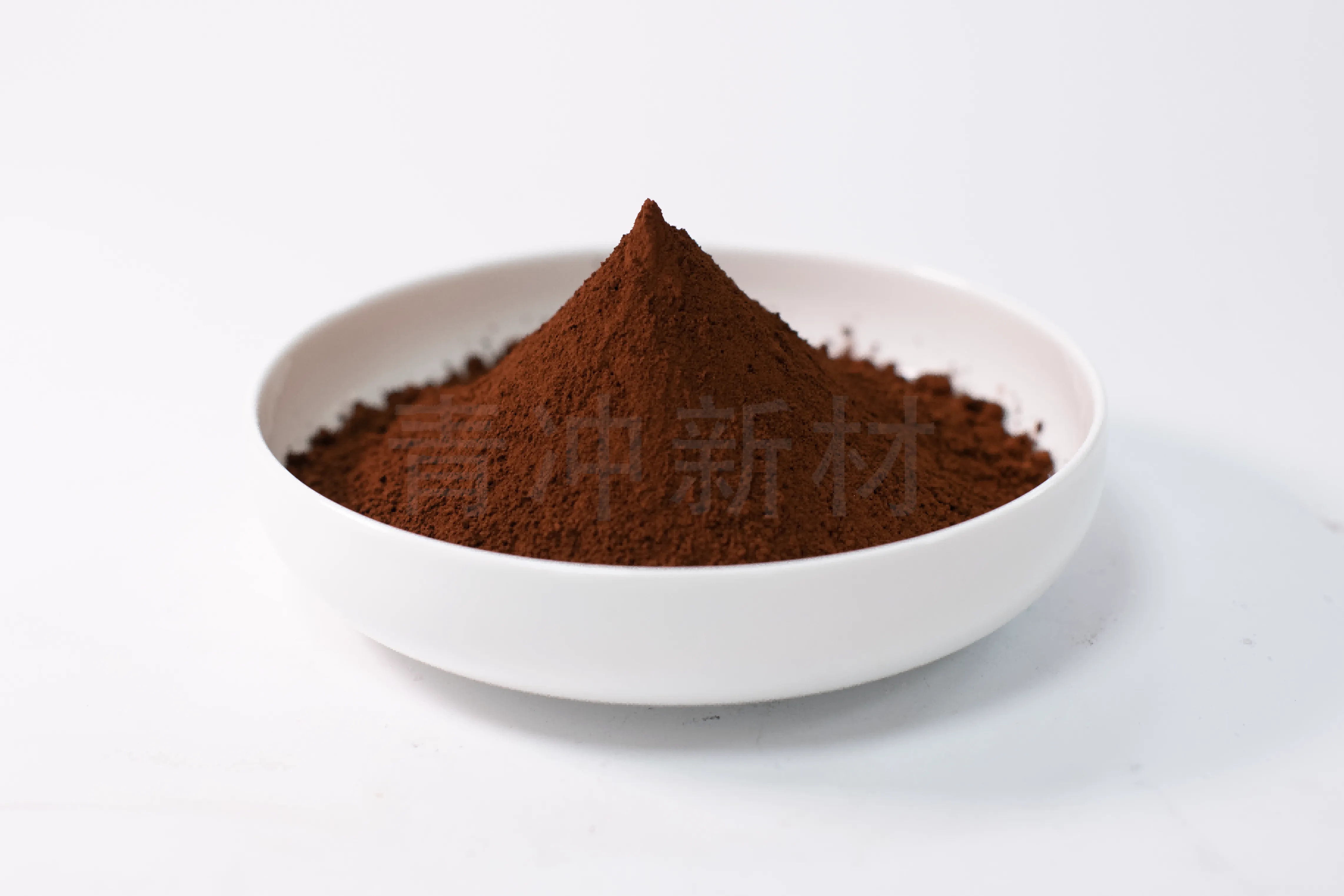
Fine Mn₃O₄ powder helps shorten the distance between raw-material mixing and ferrite phase formation. In practical terms, particle size affects how quickly the manganese source disperses with iron and zinc oxides and how uniformly the mixture reacts during calcination. A D50 in the low-micron range can be useful for many ferrite routes, but the best target depends on the plant's milling equipment, slurry solids, binder system, calcination profile, and final ferrite grade.
Buyers should avoid evaluating D50 alone. A powder with the same median particle size can behave differently if it has a broad distribution, hard agglomerates, poor flow, or inconsistent surface area. During sampling, it is worth checking slurry viscosity, milling energy, residue on sieve, calcined powder morphology, and pressed-body behavior. For electronics manufacturers scaling from trial orders to full production, lot-to-lot particle consistency is often more valuable than an impressive one-time lab value.
How Mn₃O₄ Quality Shows Up in Finished Ferrite Parts
From Raw Mn₃O₄ Quality to Ferrite Core Performance
| Raw-material factor | Process-stage effect | Possible finished-part symptom |
|---|---|---|
| Variable manganese content | Formula correction becomes less reliable. | Permeability drift, Curie temperature shift, inconsistent loss. |
| Excess moisture | Weighing error and storage instability. | Batch variation, feeding issues, extra drying demand. |
| Coarse or agglomerated particles | Longer milling and less uniform reaction. | Poor density, abnormal grain growth, higher rejection risk. |
| High impurity load | Changed sintering and grain boundary behavior. | Higher core loss, resistivity variation, lower reliability. |
| Unstable density or flow | Inconsistent feeding and mixing. | Production inefficiency and formulation adjustment pressure. |
The link between raw Mn₃O₄ and final ferrite performance is indirect but very real. A finished MnZn ferrite core is judged by magnetic and electrical properties, not by the appearance of the manganese oxide bag. Still, the core's permeability, loss curve, impedance profile, temperature behavior, and mechanical yield are built from many upstream material decisions. Mn₃O₄ is one of those decisions.
Process Notes for MnZn Ferrite Producers
Keep incoming Mn₃O₄ lots traceable to COA, production batch, and storage date.
Dry or condition powder only according to validated plant procedures; uncontrolled heating can change handling behavior.
Use pilot milling and calcination trials before changing supplier, grade, or particle-size target.
Compare finished-core data under the actual application frequency and temperature range, not only room-temperature permeability.
Retain reference samples from approved batches so future supplier or process questions have a physical comparison point.
Align packaging size with consumption rate to reduce moisture exposure after opening.
These checks are especially important for manufacturers supplying automotive electronics, telecom power systems, chargers, industrial controls, smart meters, and other applications where magnetic components face thermal cycling and tight reliability expectations.
Selecting Mn₃O₄ for Different Soft Ferrite Applications
Not every ferrite application demands the same balance of permeability, loss, resistivity, saturation, and cost. Power ferrite cores for switching transformers may prioritize low loss at operating frequency and temperature. EMI suppression beads and common-mode components may require controlled impedance behavior over a broad frequency range. Current transformers, sensors, and signal components may demand dimensional precision and stable magnetic response.
That is why manganese tetroxide selection should begin with the final part. QingChong's electronics application positions manganese materials as precursors for magnetic materials such as manganese-zinc ferrite and as raw materials for electronic ceramics. For a ferrite buyer, the practical next step is to match Mn₃O₄ specifications with the specific grade being produced, the furnace atmosphere, and the customer's magnetic-performance target.
Supplier Evaluation Checklist for Electronics-Grade Mn₃O₄
Mn₃O₄ Supplier Questions Before Mass Production
| Question | Why it matters |
|---|---|
| Can the supplier provide COA, TDS, and SDS for Mn₃O₄? | Documents help engineering, safety, import, and quality teams review the material before approval. |
| Are particle size, Mn content, moisture, and impurity limits stable across lots? | Ferrite production depends on repeatability, not just a passing first sample. |
| Can the supplier support sample testing before bulk order? | Pilot batches reduce risk when changing material source or recipe assumptions. |
| What packaging is used for powder shipments? | Bag size and moisture protection affect handling and warehouse stability. |
| Can specifications be adjusted for special requirements? | Some ferrite grades may need tighter impurity or particle-size control than standard industrial use. |
| Does the supplier have manganese-chemistry manufacturing experience? | A focused manganese supplier is better positioned to discuss upstream control and practical batch issues. |
Handling, Storage, and Safety Considerations
Mn₃O₄ is a fine powder, so handling discipline matters even when transport classification is straightforward. SDS identifies trimanganese tetroxide by CAS 1317-35-7 and notes that dust formation should be avoided, containers should be kept closed in a cool, dry, well-ventilated place, and appropriate eye, skin, and respiratory protection should be considered where nuisance dust exposure is possible. The SDS also lists the material as not dangerous goods for ADR/RID, IMDG, and IATA transport, but each buyer should confirm shipping classification against the latest documents and destination-country rules.
For ferrite plants, the practical controls are familiar: sealed transfer where possible, local exhaust at dust points, clean pallet storage, first-in-first-out inventory, and batch labels that remain readable through warehouse movement. Storage is part of quality control. A technically sound powder can still create production trouble if it absorbs moisture, loses traceability, or is mixed with the wrong lot.
A Practical Qualification Plan for New Mn₃O₄ Lots
Document review: collect COA, TDS, SDS, HS code, packaging data, and shelf-life or storage guidance.
Incoming analysis: verify appearance, moisture, Mn content, selected impurities, particle size, and density against your internal limits.
Bench mixing: check dispersion behavior with Fe₂O₃, ZnO, and additives under existing milling conditions.
Pilot calcination: compare phase development, powder morphology, and milling response after calcination.
Trial pressing and sintering: measure shrinkage, density, cracking, and dimensional consistency.
Magnetic evaluation: test permeability, core loss, impedance, saturation, and temperature behavior under application-relevant conditions.
Production decision: approve, reject, or request tighter limits based on finished-part performance and process stability.
This plan helps keep the discussion objective. Instead of asking whether Mn₃O₄ is good in a general sense, the team asks whether a specific Mn₃O₄ lot performs inside a specific ferrite process and part design.
Where QingChong Mn₃O₄ Fits in a Ferrite Supply Chain
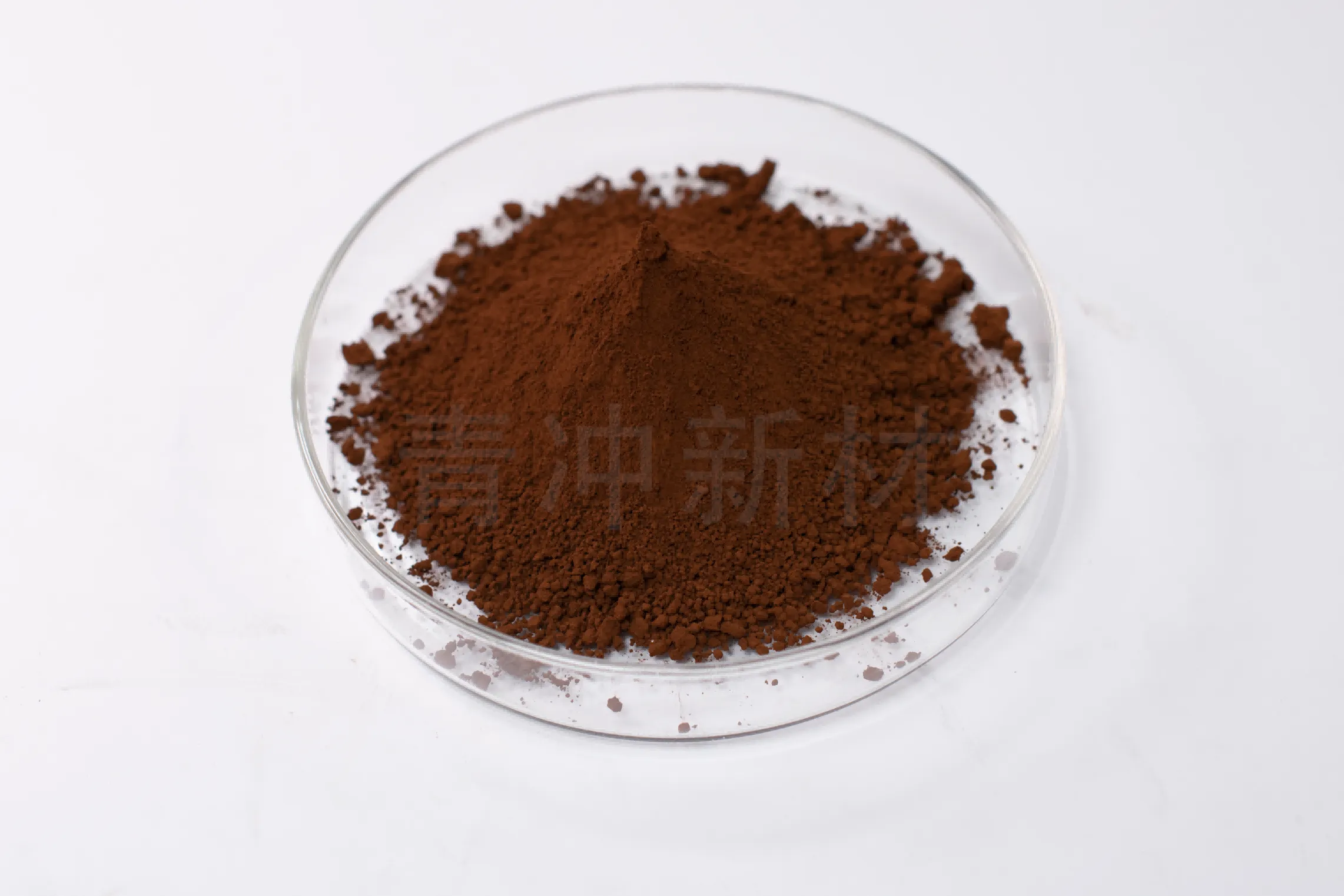
For electronics manufacturers, a useful supplier is one that can support both material data and commercial continuity. QingChong is a manganese-chemical manufacturer based in Xiangtan, Hunan, with R&D, production, and sales activities, export markets across Asia, Africa, America, Europe, and Southeast Asia, and a history in manganese chemicals since 2005.
Request Mn₃O₄ Data for Soft Ferrite Production
If your team is qualifying manganese tetroxide for MnZn ferrite cores, EMI components, transformers, inductors, or electronic ceramics, request the latest COA, TDS, SDS, particle-size data, and sample options before scaling to bulk purchase.
Contact QingChong for your customized quotation
FAQ
Is Mn₃O₄ the same as manganese dioxide?
No. Mn₃O₄ is manganese tetroxide, also called manganese(II,III) oxide or trimanganese tetroxide. Manganese dioxide is MnO₂. They have different compositions and should not be treated as interchangeable without formula and process validation.
Why is Mn₃O₄ used in manganese-zinc ferrite?
Mn₃O₄ supplies manganese into the MnZn ferrite oxide system. Its chemical composition, impurity profile, particle size, and surface behavior can influence mixing, calcination, sintering, and final magnetic properties.
Which Mn₃O₄ specification is most important?
There is no single universal parameter. Mn content, moisture, impurity profile, particle size, density, and lot consistency all matter. The most important limits depend on the ferrite grade and application.
Can a standard industrial Mn₃O₄ grade be used for electronics ferrite?
Possibly, but it should be qualified through pilot processing and finished-core testing. Electronics manufacturers should verify that the raw material fits their magnetic, electrical, dimensional, and reliability requirements.
What documents should buyers request from a Mn₃O₄ supplier?
Request a current COA, TDS, SDS, packaging information, storage guidance, and available particle-size or impurity data. For repeat purchases, require batch-level traceability.
How should Mn₃O₄ be stored?
Keep it sealed in a cool, dry, well-ventilated area and avoid dust formation. Follow the supplier's SDS and your plant's occupational hygiene procedures.
Final Takeaway
Mn₃O₄ powers soft ferrite production by doing a precise job: supplying manganese in a form that can enter the ferrite process reliably. For electronics manufacturers, the best purchasing decision is not based on a catalog name alone. It comes from matching chemistry, particle behavior, documentation, packaging, supplier capability, and finished-core test results.
When Mn₃O₄ is well specified and consistently supplied, it helps ferrite producers protect process stability, reduce qualification risk, and build magnetic components that meet the demands of modern power and signal electronics.