EN
EN
 CN
CN
 fr
fr es
es ar
ar ru
ru de
de pt
pt tr
tr vi
vi it
it ja
ja ko
ko hi
hi

EMD for Button Cells: Why a Passing COA Still Needs a Sample Trial
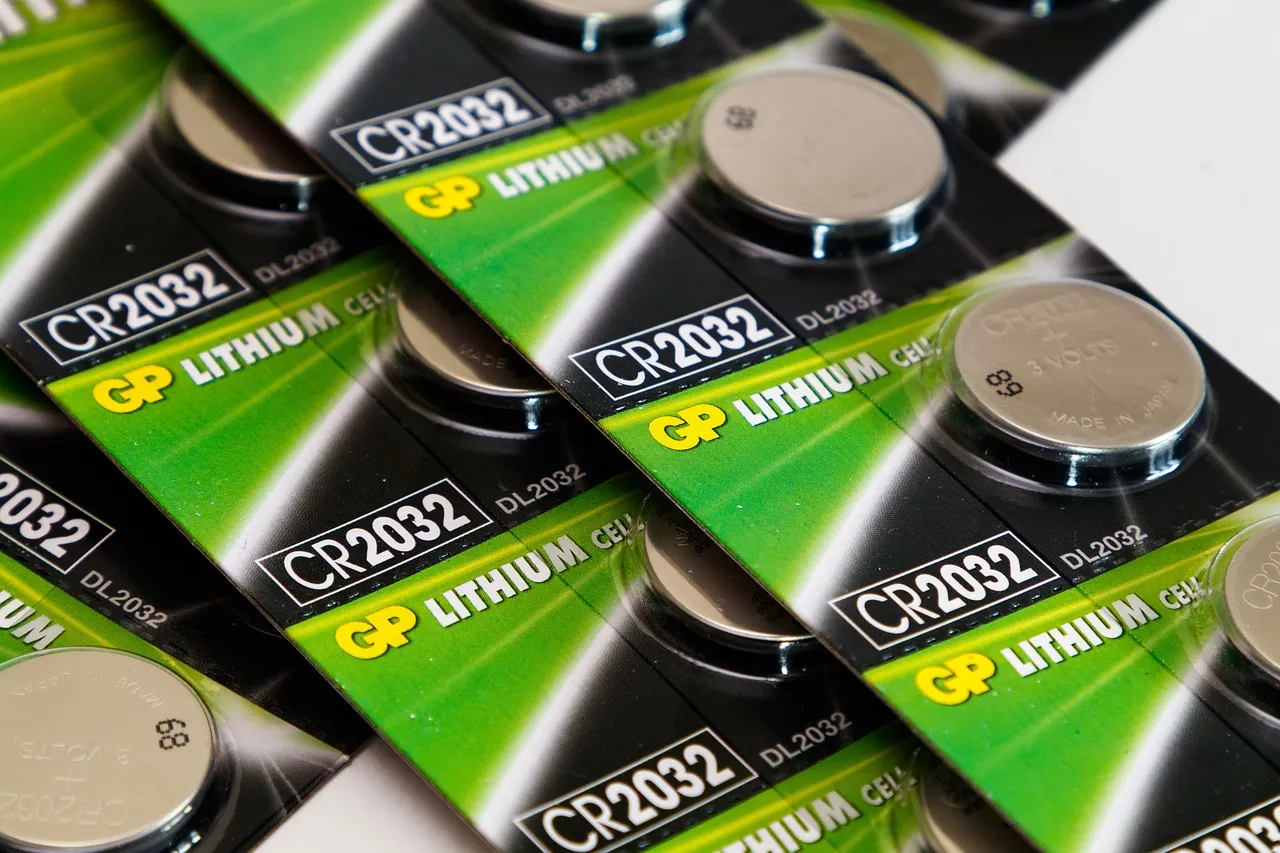
A certificate of analysis that clears every limit describes the powder, not the cell. A CR2032 fits its whole cathode, 0.3 to 0.5 g of manganese dioxide, into a case that IEC 60086-3 fixes at 20.0 mm nominal diameter (±0.25 mm) and 3.2 mm height. There is no room to add active material, little headspace at the crimp, and only 20 to 200 microlitres of electrolyte to share with what the powder brings. So EMD for button cells has to be trialled: heat treated on your schedule, pressed with your recipe, filled and crimped on your line, then discharged on the load your device draws. Skip the trial and you have measured the powder, not the battery.
A button cell has no spare volume to buy margin with
IEC 60086-3 fixes case dimensions and tolerances for round lithium, alkaline, silver oxide and zinc-air button cells. Once the size is fixed, capacity comes from how much of the cathode you convert, not from adding more of it. MnO2 makes up about 40 to 60% of the cathode mass in a lithium manganese dioxide cell, and published CR2032 ratings sit near 220 to 225 mAh at about 0.2 mA to a 2.0 V cut-off.
That margin matters because you ship to a minimum. Cells are sold against a defined test, so what decides your yield is the spread across a lot, not the average of a few hand-built samples. A material change that moves utilisation by a small percentage shifts the tail of that distribution, which is where scrap and field complaints come from.
Every other internal budget is tight as well. Coin-cell lines fill 20 to 200 microlitres of electrolyte at roughly ±1 microlitre, assemble in dry rooms at a dew point of -45 °C or lower, and vacuum-dry electrodes to residual moisture near 100 ppm. Those controls exist because water reacts with lithium and the organic electrolyte and generates gas in a sealed can. Whatever the powder adds to that budget is paid for at the seal.
Five things the specification sheet does not measure
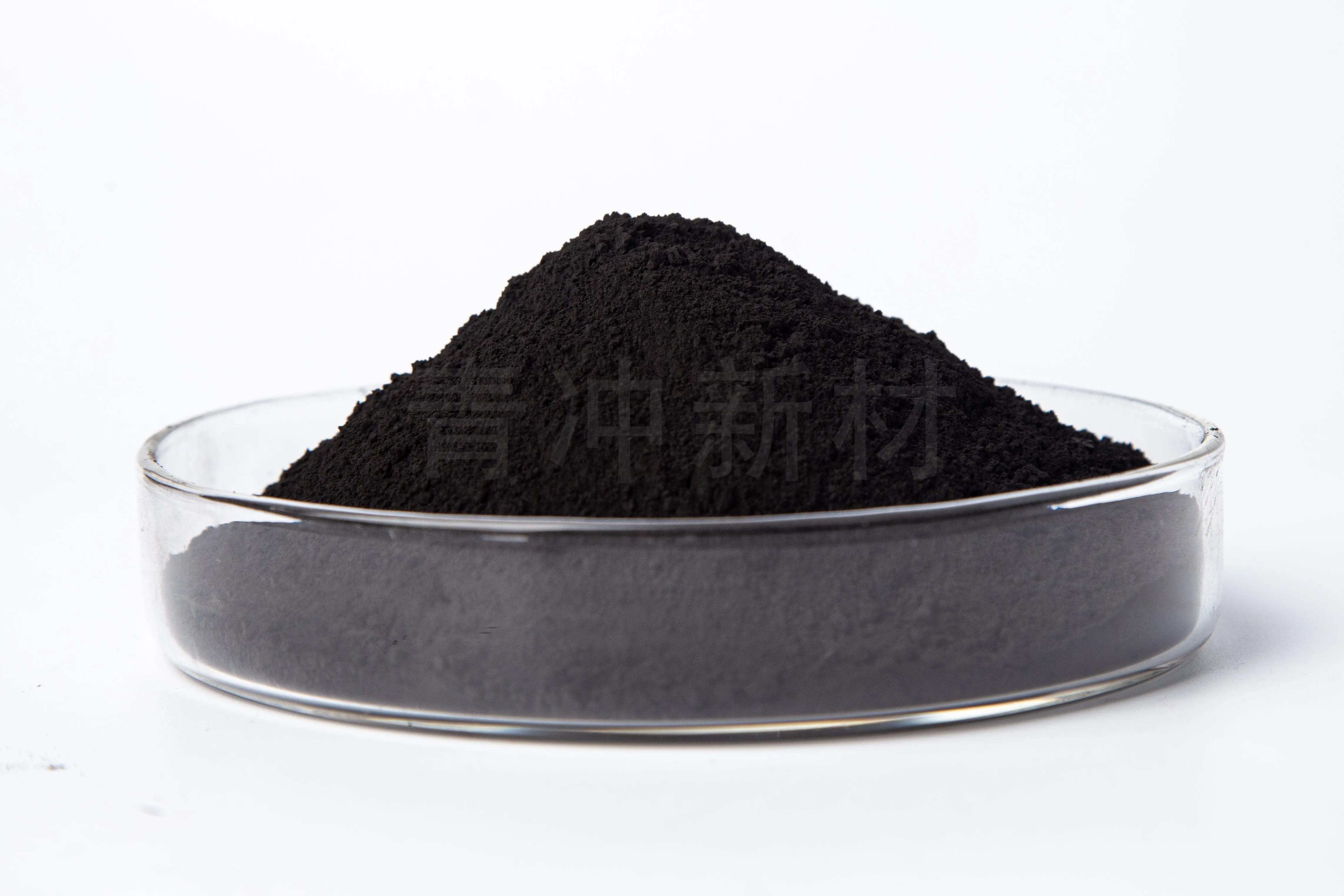
QingChong specifies electrolytic manganese dioxide at 91% MnO2 minimum, iron 100 ppm maximum, moisture 3% maximum, pH 5 to 7.5 and 100 to 400 mesh, made by electrolysis from manganese sulfate under ISO 9001 quality management. Those limits are the right screen for a battery-grade powder. None predicts behaviour inside a 3.2 mm can.
| Specification line | What it controls | What the cell still has to show |
|---|---|---|
| MnO2 90% min. | Active material available per gram | How much survives your heat treatment at your compaction density |
| Moisture 3% max. | Condition of the powder as shipped | Residual water after your electrode drying, and gas during storage |
| Fe 200 ppm max. | One metal at one limit | Cu, Ni, Co, alkali metals and soluble sulfate in a 0.3 to 0.5 g cathode |
| pH 5 to 7.5 | A surface acidity band | Residual acid or alkali after neutralisation, and its reaction with your electrolyte |
| Particle size 100 to 400 mesh | A screening band, not a distribution | D10, D50 and D90, tap and bulk density, compaction response and die fill on your press |
These are not gaps in the specification. They are why a spec sheet and a sample trial answer different questions.
Heat treatment is where two identical COAs diverge
EMD does not go into a lithium cell as delivered. It is dehydrated by thermal treatment, commonly between 250 and 400 °C, and patent literature describes a two-step route: up to about 250 °C to drive off surface and non-crystalline water, then 250 to 350 °C to remove lattice water. The same sources note the cost: heating converts gamma MnO2 toward a gamma/beta structure, and the beta-rich phase takes up less lithium.
A study that graded EMD between 340 and 420 °C found better discharge in the 340 to 380 °C range, where water removal and pore opening lowered diffusion resistance, and worse results at 400 to 420 °C, where oxygen loss cut active MnO2 and the reactive surface area. The window is real and not universal. It depends on the water content, pore structure and phase mix of the starting powder, so a schedule tuned to your current material is a hypothesis about a new lot, not a setting you can carry over.
Surface chemistry behaves the same way. EMD leaves the electrolytic bath with residual acidity that is neutralised before use. Where sodium hydroxide is the neutralising base, sodium can occupy surface sites, be released into the electrolyte, plate onto the lithium anode and react with the solvent to generate gas, shortening storage life. No COA line states the neutralisation route or the residual sodium, so both have to be requested and then measured in stored cells.
Run the trial on your line, on your protocol
A usable trial reproduces production as closely as a sample quantity allows.
- Build with production tooling, recipe, electrolyte fill and crimp parameters. Keep one arm on your current material as the control, run both in the same period, and compare distributions rather than single cells.
- Measure capacity at your reference drain and again on the device profile. A cell that delivers its rated mAh at a continuous 0.2 mA can still sag under the 10 to 15 mA pulses a key fob or radio module draws.
- Include storage: hold cells at elevated temperature, then re-measure capacity and inspect the crimp for leakage. Water and alkali residues surface here, not on day one.
- Fix the thresholds before you start: minimum capacity, acceptable spread, retention after storage, and the number of leaking cells that ends the trial. Data without thresholds decides nothing.
Request sample from at least two production lots plus a retained reference from each, and confirm in writing that bulk will come from the same production route. A sample from a pilot batch proves less than one drawn from routine output.
What to send with the sample request
| Send with the request | Ask to come back with the sample |
|---|---|
| Cell designation, rating target, cut-off and service hours | Batch COA showing test methods, plus TDS and SDS |
| Heat-treatment window, cathode recipe, conductive additive and binder | Neutralisation route, residual sodium, heat-treatment guidance |
| Compaction or coating target, electrode diameter, porosity | D10, D50 and D90 with method, tap and bulk density, surface area |
| Electrolyte system, fill volume and dry-room dew point | Moisture at dispatch, packing liner and storage recommendation |
| Discharge protocol, pulse profile and storage thresholds | Sample quantity, whether sample and bulk share the same route, plus MOQ and lead time |
FAQ
If the COA matches the grade we already run, can we skip the trial?
No. The COA controls composition at dispatch; button cell output depends on heat-treatment response, compaction, residual water and surface residues. Keep the COA as incoming inspection and release the material on cell results.
Does EMD for a lithium button cell have to be heat treated?
Yes. EMD is dehydrated before use in lithium manganese dioxide cells, typically between 250 and 400 °C, with a two-step route at 200 to 350 °C described in patent literature. One published study found better discharge between 340 and 380 °C and worse between 400 and 420 °C. Confirm the schedule against your own oven and your own cells.
How much sample is enough?
Enough to build cells under your production recipe across at least two lots, with a retained reference from each.
Can a lower-cost manganese powder replace EMD in a button cell?
Check what the substitution costs inside the can. QingChong's EMD carries 91% MnO2 minimum with iron at 100 ppm maximum, while discharge manganese powder is specified at 60% MnO2 minimum with iron to 6% and silica to 15%. In a case of fixed volume, inert material displaces active material and you cannot add mass back. Run both through the same cell build before deciding.