EN
EN
 CN
CN
 fr
fr es
es ar
ar ru
ru de
de pt
pt tr
tr vi
vi it
it ja
ja ko
ko hi
hi

What Is a Lithium Manganese Dioxide Battery? EMD Cathode Material and Primary Cell Guide
What Is a Lithium Manganese Dioxide Battery? EMD Cathode Material and Primary Cell Guide
A lithium manganese dioxide battery, often written as Li-MnO2, is a primary lithium cell that pairs a lithium metal anode with a manganese dioxide cathode. The chemistry typically delivers about 3.0 V per cell, good energy density, low self-discharge, and long storage life when the cell is designed and stored correctly. For battery engineers and material buyers, cell performance begins with the cathode. Electrolytic manganese dioxide (EMD) must provide controlled purity, particle properties, moisture, and electrochemical activity from lot to lot.
What is a lithium manganese dioxide battery?
A Li-MnO2 cell contains lithium metal as the negative electrode, manganese dioxide as the positive electrode, a separator, and a non-aqueous electrolyte that transports lithium ions.
During discharge, lithium is oxidized at the anode and releases electrons. The electrons power the device through the external circuit. Lithium ions move through the electrolyte to the cathode, where manganese dioxide is reduced and lithium enters the cathode structure. The simplified overall reaction is:
Li + MnO2 -> LiMnO2
This reaction is designed to run in one direction. A lithium manganese dioxide battery is a primary battery, not a rechargeable lithium-ion battery. Recharge attempts can cause leakage, internal heating, venting, or rupture.
Why EMD is used as the cathode material
The manganese dioxide cathode must accept lithium ions and electrons while preserving the electrode's structure. Natural manganese dioxide can vary in mineral phase, impurities, morphology, and reactivity. Electrolytic production gives EMD more controlled composition and physical properties.
That control can improve mixing, electrode formation, compaction, electrolyte wetting, discharge consistency, and lot repeatability. Low iron and other unwanted metals also reduce potential interference with storage stability or electrochemical behavior.
EMD is not a universal drop-in material. A grade that works in an alkaline or zinc-carbon cell may not be optimized for a lithium manganese dioxide design. Cathode developers still need to qualify crystal phase, surface area, particle-size distribution, pore structure, residual moisture, tap density, and discharge behavior in the intended electrolyte and electrode recipe. The supplier specification narrows the candidates; cell testing makes the final decision.
How to read an EMD specification
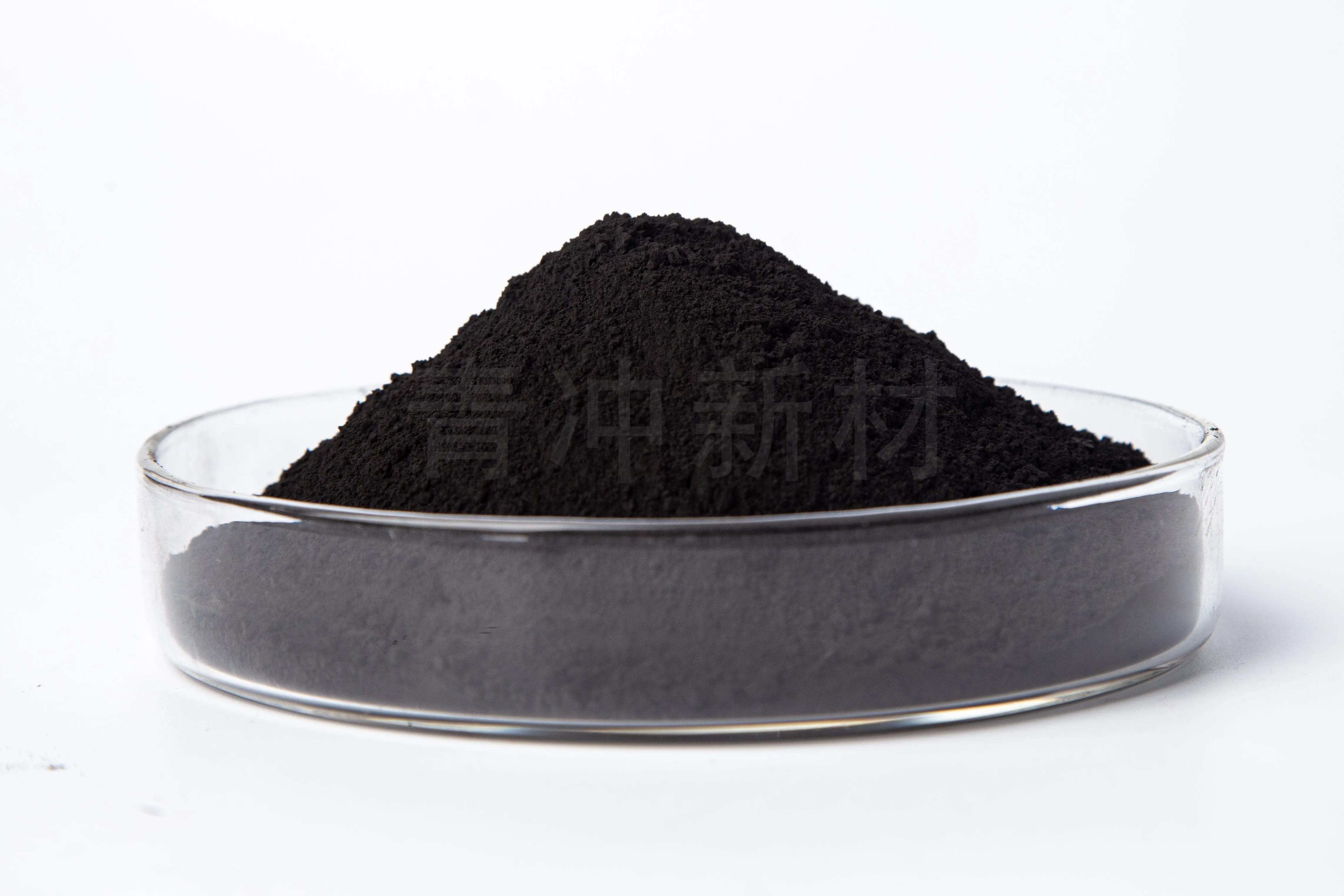
A useful specification connects each number to a manufacturing or performance consequence. The QingChong electrolytic manganese dioxide baseline provides a starting point for technical review, but buyers should confirm the exact battery grade and recent lot results before approving material.
| Parameter | QingChong baseline | Why it matters to a cell maker |
|---|---|---|
| Manganese dioxide content | 90-92%; 90% minimum in the technical table | Establishes active-material assay and normalizes lot comparisons. |
| Iron | 200 ppm maximum | Controls a metallic impurity that can affect stability. |
| Moisture | 3% maximum | May require additional drying or a tighter battery-grade limit. |
| Particle size | 200-325 mesh | Affects flow, mixing, packing, electrode density, and reaction uniformity. |
| pH | 5-7.5 | Helps screen washing consistency and compatibility with downstream processing. |
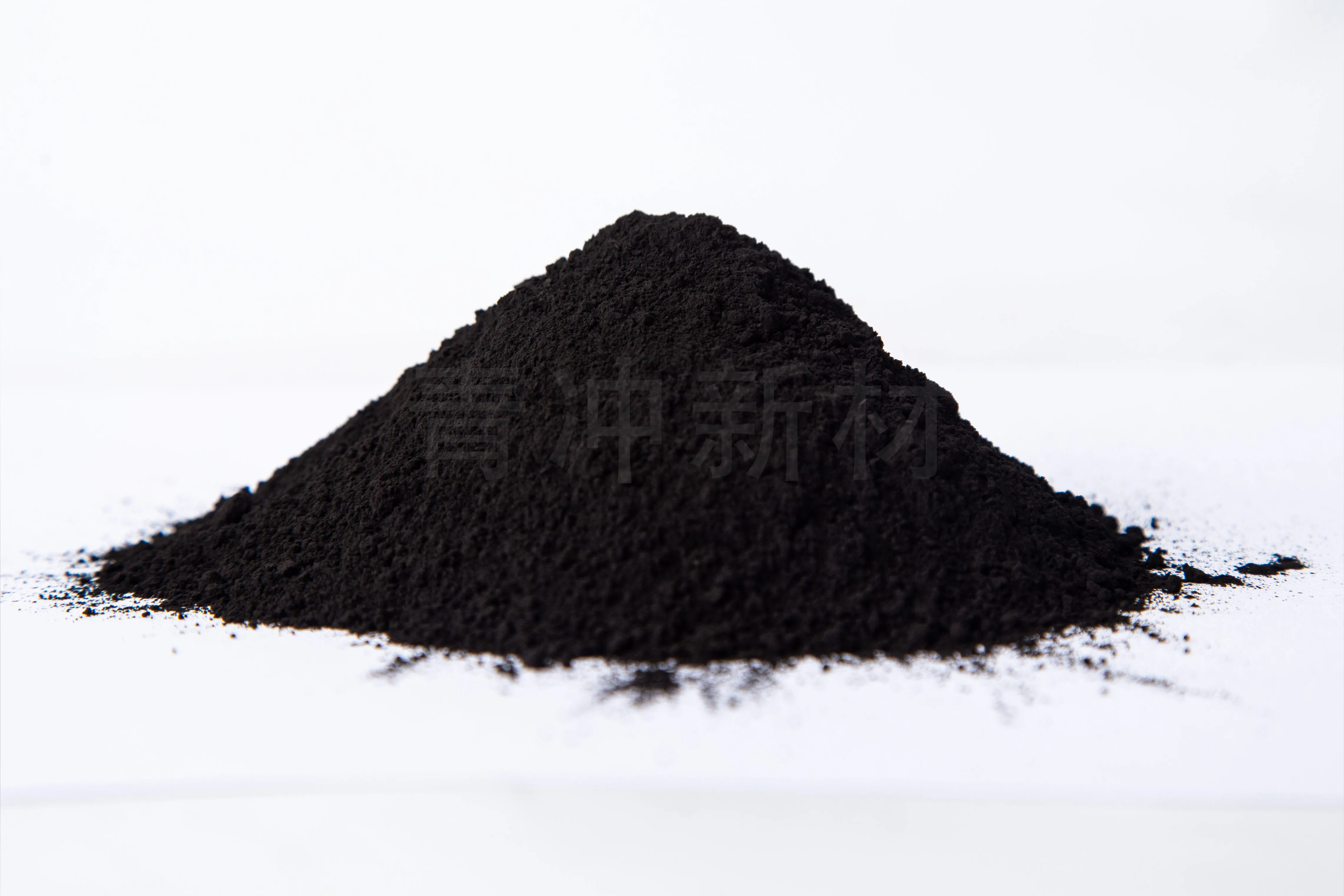
| Appearance and solubility | Blackish, odorless powder; insoluble in water | Supports incoming inspection and material identification. |
These values are not a complete lithium-cell acceptance standard. Moisture is especially sensitive around lithium metal and non-aqueous electrolytes.
EMD is one part of the complete cathode
The active MnO2 powder does not work alone. A practical cathode also needs an electronic conductor, usually a carbon material, plus a binder or forming method that holds the electrode together. The design must leave enough pore space for electrolyte while maintaining contact between MnO2 particles, conductive carbon, and the current collector.
This balance affects capacity utilization, voltage drop, impedance, and pulse response. Very fine powder may improve contact but make mixing, dust control, or electrolyte access harder. High compaction can increase volumetric energy yet restrict ion movement if porosity falls too far. For that reason, incoming EMD tests should be connected to slurry or dry-mix behavior, electrode density, mechanical strength, electrolyte uptake, and discharge data. A powder can meet its chemical assay and still require formulation changes before it matches an approved cathode.
Main performance characteristics of Li-MnO2 cells
Cell performance depends on format, electrode loading, electrolyte, separator, sealing system, temperature, storage history, and discharge profile. The chemistry nevertheless has several recognizable characteristics:
- Voltage: Li-MnO2 cells commonly have a nominal voltage near 3.0 V. Loaded and end-of-discharge voltage must match the device.
- Storage: Low self-discharge supports long storage. Actual shelf life is manufacturer-qualified, not guaranteed by cathode assay alone.
- Energy and load: The chemistry offers a strong balance of energy density and load capability. Coin cells usually serve light or intermittent loads, while suitable cylindrical designs can support higher current or pulse demands.
- Temperature: Lithium primary cells can work across a broad temperature range, but capacity, voltage, and pulse response still change with temperature.
- Safety: Lithium metal is reactive. Cell construction, venting, protection against short circuit, transport compliance, correct polarity, and prevention of charging are essential parts of the product design.
These tradeoffs explain why manganese materials for battery applications must be selected with the final cell and device profile in mind rather than by chemical name alone.
Li-MnO2 compared with other common battery systems
No battery chemistry is best for every product. Designers should compare voltage window, current profile, storage period, available space, charging requirements, temperature, safety controls, and total system cost.
| Chemistry | Rechargeable? | Typical nominal voltage | Main selection logic |
|---|---|---|---|
| Lithium manganese dioxide | No | About 3.0 V | Strong energy-to-size ratio, low self-discharge, broad use in coin and cylindrical primary cells. |
| Alkaline zinc-manganese dioxide | No | About 1.5 V | Familiar, widely available, and economical where size, voltage, and storage targets permit. |
| Lithium thionyl chloride | No | About 3.6 V | Very long-duration, low-rate service is a common fit; pulse demand and safety design require careful review. |
| Lithium-ion | Yes | Commonly about 3.6-3.7 V | Chosen when repeated charging is required; needs a compatible charger, protection system, and qualified pack design. |
The MnO2 in a primary Li-MnO2 cell is not the same cathode system as spinel lithium manganese oxide (LiMn2O4) used in some rechargeable lithium-ion batteries. Their structures and qualification methods differ.
Cell formats and typical applications
Many CR coin cells use lithium manganese dioxide chemistry in clocks, memory backup, key fobs, sensors, calculators, security devices, and compact instruments. Cylindrical cells serve designs needing greater capacity or pulse capability, including metering, cameras, alarms, tracking equipment, and industrial electronics.
Device manufacturers must check the exact cell's load curve, pulse performance, temperature limits, dimensions, terminals, safety approvals, and transport status. A coin cell that works in a clock may fail early in a radio transmitter at the same nominal voltage.
Qualifying battery-grade EMD
Material qualification should combine documentation with electrode and cell trials. Teams reviewing battery-related EMD grades can use this sequence:
- Confirm identity, formula, CAS number 1313-13-9, manufacturing route, intended chemistry, and grade designation.
- Review recent certificates of analysis for MnO2 assay, iron, moisture, pH, particle-size distribution, and any impurity limits that matter to the electrolyte and lithium system.
- Request test methods, sampling, lot definition, packaging, storage, shelf life, change control, TDS, and SDS.
- Measure the properties the commercial specification does not capture, such as phase composition, surface area, pore structure, tap density, compaction, and electrode-level electrochemical response.
- Run representative electrode, assembly, aging, and discharge tests. Compare capacity, voltage, impedance, pulse response, temperature behavior, and storage stability with the control material.
QingChong's stated EMD parameters support initial screening. Contact QingChong for the recent COA and the other information you need.
FAQs
Is a lithium manganese dioxide battery rechargeable?
No. It is intended for one discharge life and should not be placed in a charger or subjected to reverse current. Recharge attempts can create dangerous internal conditions.
Is EMD the same as ordinary manganese dioxide powder?
They share the MnO2 formula, but origin and properties matter. EMD is produced electrochemically to control purity and structure. Natural or chemical grades may differ in phase, morphology, impurities, and activity. Battery producers qualify a specific grade.
Does higher MnO2 purity guarantee a better battery?
No. Assay is important, but cell performance also depends on crystal phase, accessible surface, pore structure, particle distribution, moisture, impurities, electrode density, conductive additives, electrolyte, and assembly conditions. Purity should be evaluated with physical and electrochemical data.
What does the CR marking on a coin cell mean?
In common battery designation systems, CR identifies a round lithium manganese dioxide cell. The following digits usually describe nominal dimensions, but users should verify the manufacturer's datasheet because capacity, terminals, allowable load, and safety features can differ among cells of similar size.
How should EMD be stored and handled?
Keep the powder sealed in a dry, controlled area and follow the SDS. Control dust and protect the material from contamination and moisture. Battery plants may add drying and controlled-atmosphere steps for their electrolyte and lithium-metal process.
The practical takeaway
A lithium manganese dioxide battery combines lithium metal with a manganese dioxide cathode to deliver primary power at about 3.0 V. Its compact energy storage, low self-discharge, and range of formats make it useful in long-life electronics, but the cell cannot be recharged. EMD supports consistent cathode production only when its chemistry, physical properties, and electrochemical behavior match the cell design.
For teams evaluating a new source, begin with the published specification, then verify test methods, recent lot data, and performance in representative cells. Review QingChong's broader manganese dioxide product range or contact the technical team to discuss EMD documentation and sample qualification for a defined battery process.