EN
EN
 CN
CN
 fr
fr es
es ar
ar ru
ru de
de pt
pt tr
tr vi
vi it
it ja
ja ko
ko hi
hi

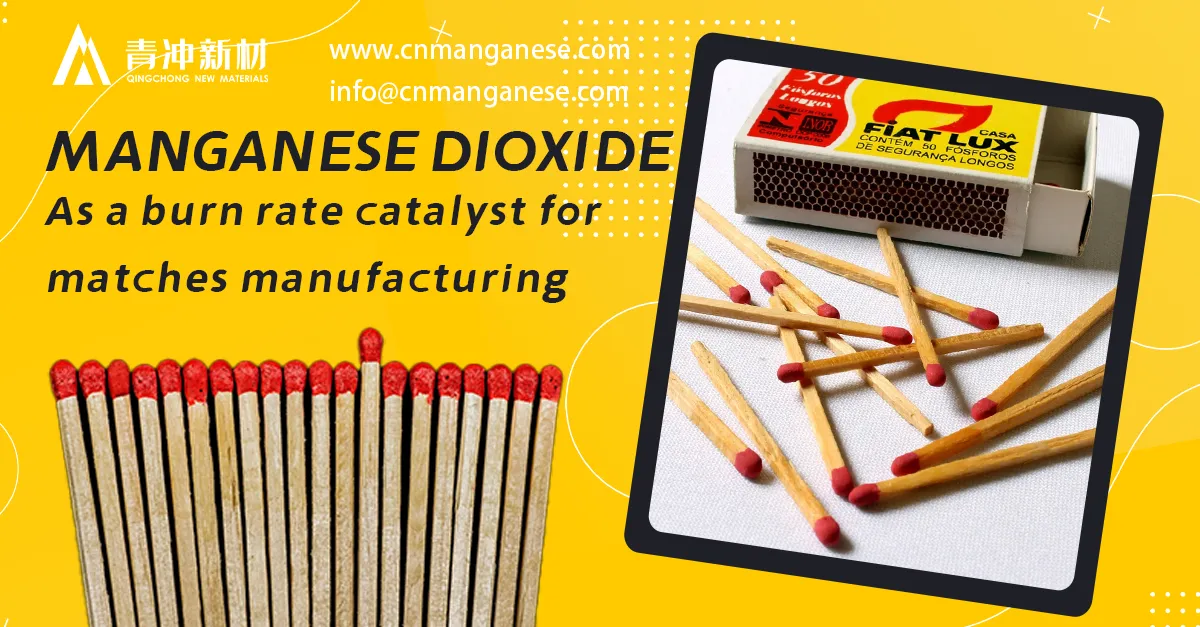
How Manganese Dioxide Lights Your Match
There's a simple, everyday magic in striking a match. A scrape, a fizz, a burst of flame—a controlled miniature inferno born from a tiny tip. We take this small miracle for granted, but behind that instant of combustion lies a precisely engineered chemical ballet. And one of the most crucial dancers in that ballet is an unassuming black
powder: manganese dioxide.
The Problem: A Fire That Starts Too Slow
At its heart, fire is a chemical reaction—a rapid combination of a fuel with oxygen, releasing heat and light. For a match to be useful, this reaction must be incredibly fast and start at a very low ignition temperature. The friction from striking the match provides the initial heat, but it's not enough on its own. If the chemicals in the match head burned slowly, you'd get a sputter, not a spark. The challenge for matchmakers was to find a way to make the combustion reaction explosive, yet perfectly controlled.
The Solution: Manganese Dioxide, The Oxygen Liberator
This is where manganese dioxide (chemical formula MnO₂) comes in. It plays two critical, intertwined roles:
1. As a Catalyst: A catalyst is a substance that speeds up a chemical reaction without being consumed itself. Manganese dioxide isn't the main fuel, but it makes the fuel burn dramatically faster.
2. As an Oxidizing Agent: It is a rich source of oxygen. When the friction of striking the match generates a small amount of heat, the manganese dioxide readily releases its oxygen.
Here’s the simple chemistry: The match head contains another key chemical, potassium chlorate(KClO₃), which is also a powerful oxidizing agent. However, decomposing potassium chlorate to release oxygen on its own requires a very high temperature. Manganese dioxide dramatically lowers the temperature required for this decomposition. When heated, the MnO₂ facilitates the rapid release of oxygen from the potassium chlorate, and this burst of oxygen instantly ignites the other fuels in the match head, like sulfur or antimony sulfide. The result is that satisfying, immediate flame.
The Match Head Dream Team
Manganese dioxide doesn't work alone. It's part of a perfectly formulated team inside the match head:
• Potassium Chlorate: The primary oxygen supplier.
• Sulfur or Antimony Sulfide: The combustible fuel that produces the flame.
• Powdered Glass or Silica: Adds grit to create the necessary friction against the striking surface.
• Binders (like animal glue or starch): Hold the powdered mixture together in a tiny, robust head.
Manganese dioxide is the team's coordinator. It ensures that the oxygen from the potassium chlorate is delivered in a rapid, intense burst, guaranteeing a reliable light every time.