EN
EN
 CN
CN
 fr
fr es
es ar
ar ru
ru de
de pt
pt tr
tr vi
vi it
it ja
ja ko
ko hi
hi

Manganese Oxide in Animal Feed: Dosage, Bioavailability, and Why Feed Formulators Prefer MnO Over Organic Alternatives
Manganese oxide in animal feed is not dosed by the weight of MnO alone. It is dosed by the amount of elemental manganese the complete diet still needs after the basal ingredients have been analyzed. That distinction controls everything from premix cost to regulatory compliance. MnO can be a compact, economical manganese source, but its value depends on verified Mn content, physical quality, contaminants, the target animal, and the response used to judge bioavailability.
Formulator's answer: Set the elemental-Mn target, subtract basal Mn and other sources, then divide the gap by the product's guaranteed Mn fraction. A 46% Mn material supplies 0.46 kg Mn per kilogram. An industrial specification does not prove feed suitability.
What MnO Contributes to an Animal Feed Formula
Manganese supports enzyme activity, connective tissue, skeletal development, metabolism, and antioxidant defense. Formulators must supply enough available Mn without exceeding total-feed limits or increasing avoidable excretion.
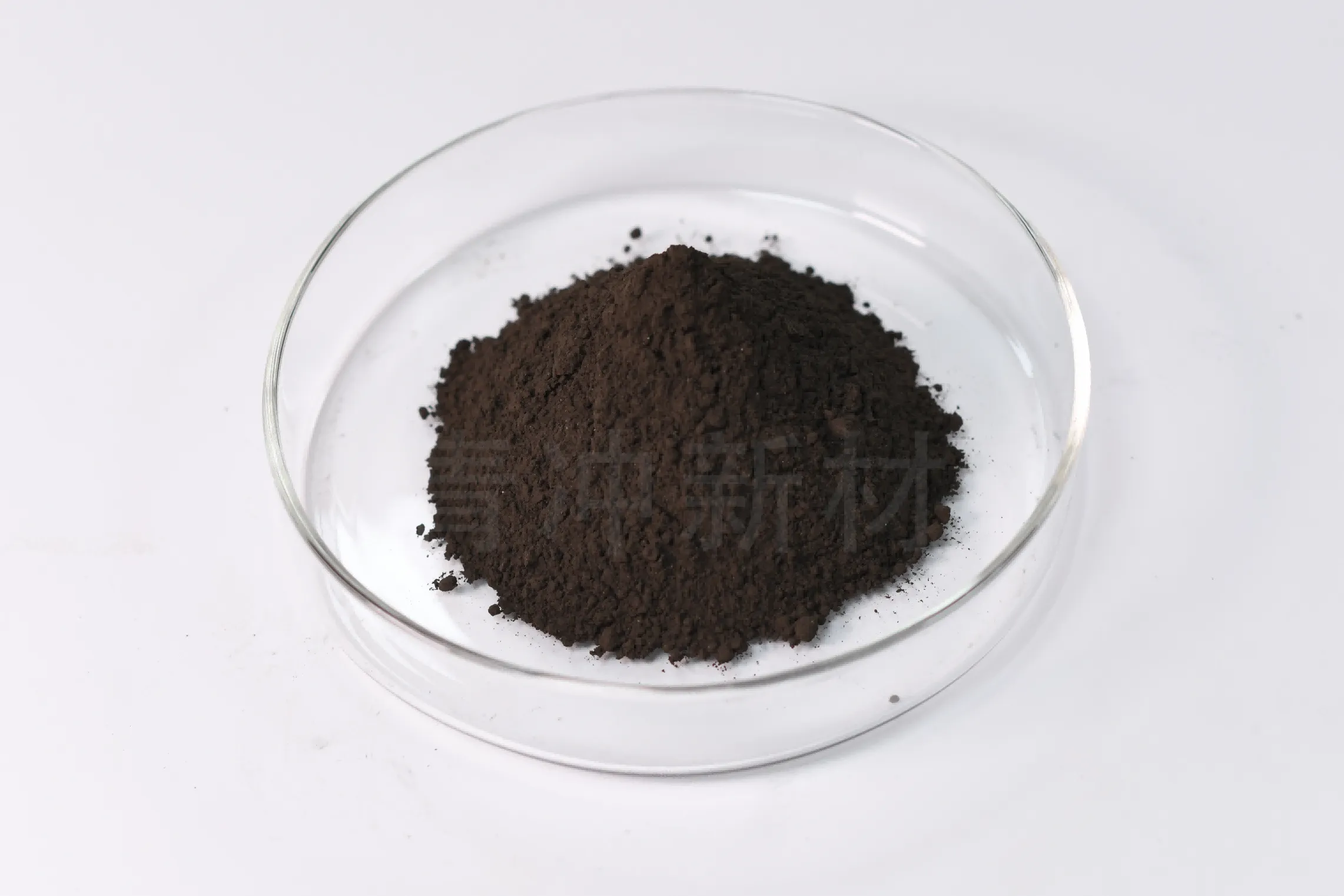
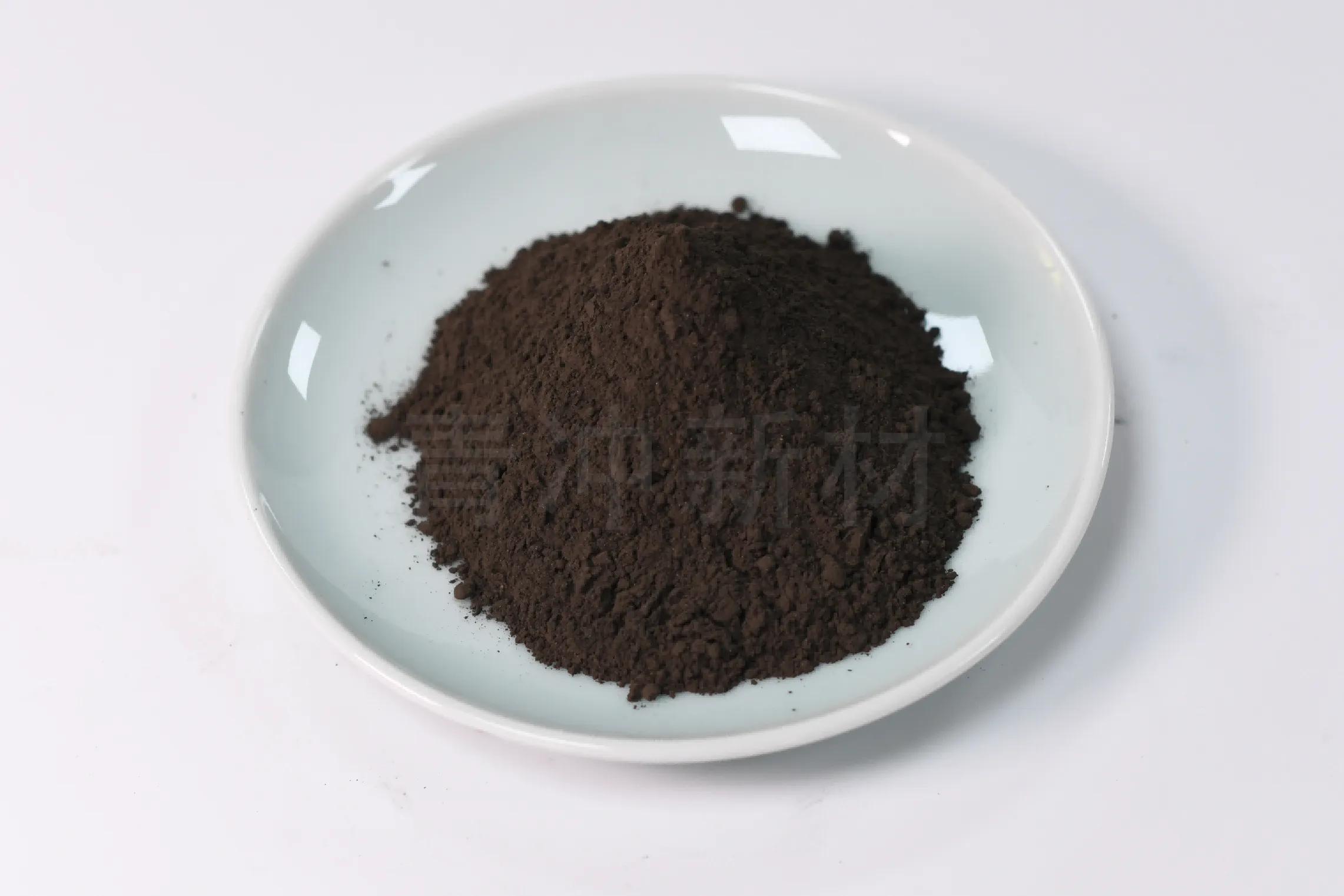
Manganese(II) oxide, also called manganous oxide or manganese monoxide, has the formula MnO. Pure MnO is about 77.45% elemental Mn, but formulas must use the commercial lot's guaranteed and verified elemental-Mn result.
QingChong manganese oxide has preliminary values of MnO 60% minimum, Mn 46% minimum, and particle size below 250 micrometers. Feed use still requires a destination-market feed-grade declaration, lot-specific CoA, approved methods, and compliance with the buyer's safety controls.
Calculate Manganese Oxide Dosage from Elemental Mn
Use the elemental-manganese guarantee as the denominator. Keep all diet values on the same moisture basis, normally as-fed for a complete-feed formula unless the applicable standard specifies otherwise.
MnO product required (kg/t feed) = supplemental elemental Mn needed (mg/kg feed) / product Mn fraction / 1,000
Because 1 mg/kg equals 1 g per metric ton, a 60 mg/kg elemental-Mn addition equals 60 g Mn per ton.
Worked Example: 60 mg/kg Supplemental Mn
| Calculation step | Value | Formulator meaning |
|---|---|---|
| Chosen supplemental Mn | 60 mg/kg feed | 60 g elemental Mn per metric ton |
| Guaranteed Mn in MnO product | 46% | 0.46 kg Mn per kg of product |
| MnO product addition | 60 / 0.46 / 1,000 = 0.1304 kg/t | Approximately 130 g product per metric ton |
| Premix inclusion at 2 kg/t | 130 g / 2 kg = 6.52% | Before allowances for assay, processing loss, and premix design |
This is a calculation example, not a universal recommendation. The target depends on species, stage, basal ingredients, antagonists, nutrition standards, and local law. Analyze basal Mn and account for every Mn-bearing source before calculating the gap.
A practical five-step dosing workflow
- Set the elemental-Mn target for the animal and production stage.
- Measure or estimate basal Mn on the same moisture basis.
- Subtract every other intentional and incidental Mn source.
- Divide the gap by the verified elemental-Mn fraction of the MnO lot.
- Check legal maximums, homogeneity, analytical tolerance, and overage policy.
Bioavailability: What the MnO Research Really Shows
Bioavailability changes with source, processing, particle characteristics, diet, animal, age, and response criterion. Growth may remain unchanged while tissue Mn or enzyme activity differs, so a single percentage cannot be transferred to every formula.
In broilers, feed-grade oxides produced bone-based relative values of about 70-93 when manganese sulfate equaled 100; kidney estimates were lower for several lots. Another study estimated MnO at 91% of sulfate at 21 days and 82-83% later, while proteinate ranked higher in that trial.
Other research found better tibia and absorption-related responses from organic Mn, yet one study detected no significant proteinate advantage over sulfate. Organic sources can improve selected responses, but benefits remain product-, diet-, and endpoint-specific.
MnO, Manganese Sulfate, and Organic Mn: Decision Comparison
| Decision factor | MnO | Manganese sulfate | Organic Mn source |
|---|---|---|---|
| Elemental Mn density | Often high in a qualified commercial grade | Lower than MnO; hydrate form matters | Often lower and carrier-dependent |
| Water solubility | Insoluble in water; acid-soluble | Readily soluble | Depends on ligand, chelation, and product design |
| Biological response | Can be effective, but varies by oxide lot and endpoint | Common reference source in trials | May improve some tissue or stress responses; not universally superior |
| Premix interaction | Lower water solubility may reduce some reactive-ion exposure, but stability must be tested | Solubility can increase reactivity in concentrated premixes | May protect the mineral in some matrices; product chemistry matters |
| Cost per unit Mn | Frequently attractive | Usually economical | Usually carries a price premium |
| Best use case | Cost-controlled baseline supplementation with qualified consistency | Soluble inorganic source and research benchmark | Targeted response, stress program, or low-excretion strategy supported by data |
Why Formulators Often Choose MnO Over Organic Alternatives
“Prefer” describes a formulation and procurement choice, not a universal biological ranking. MnO can deliver concentrated elemental Mn at a competitive unit cost, which matters at commercial feed scale.
1. Higher nutrient density simplifies the premix
A 46% Mn material needs about 130 g/t to deliver 60 mg/kg supplemental Mn; a 20% Mn product needs 300 g/t. Lower inclusion frees carrier capacity and reduces freight per unit Mn, provided the premix can distribute it uniformly.
2. Cost should be compared per available unit, not per bag
Compare cost per kilogram of guaranteed elemental Mn, then adjust for accepted relative bioavailability. An organic premium is justified when it delivers a measurable response, validated lower inclusion, or controlled risk reduction.
3. Lower solubility can be useful in concentrated systems
MnO is insoluble in water and acid-soluble. Lower water solubility may reduce contact between free metal ions and vitamins, but humidity, choline chloride, other minerals, particle surface, packaging, and time still matter. Confirm stability in the actual premix.
4. A consistent inorganic baseline is easy to audit
MnO uses familiar controls: identity, Mn assay, particle size, moisture, bulk density, heavy metals, and homogeneity. Organic products also require verification of ligand, complexation, free mineral, carrier, and analytical definition.
When an Organic Manganese Source May Be the Better Choice
Choose organic Mn when evidence supports a specific goal such as bone response under challenge, reproduction, validated lower supplementation, or reduced excretion. The trial should match the intended species, stage, diet, stressor, and endpoint.
A blend can use MnO for the baseline and organic Mn for a targeted response. Calculate every source as elemental Mn.
Feed-Grade Qualification Comes Before Price
“Manganese oxide” identifies chemistry, not feed suitability. US 21 CFR 582.5464 recognizes manganous oxide under good manufacturing or feeding practice; 21 CFR 582.1 also requires appropriate grade and limits use to the amount reasonably required. Other markets have separate authorizations, labeling, maximum-content, and contaminant rules.
QingChong provide good quality MnO, visit our MnO product page and contact us for your specific quotation.
Lot-Release and Supplier Audit Checklist
| Control | What to request | Risk controlled |
|---|---|---|
| Legal identity | Feed-use name, authorization/registration status, intended species and market | Using an industrial or unapproved grade |
| Potency | Lot-specific elemental Mn and MnO, method, uncertainty, and guarantee | Under- or over-supplementation |
| Contaminants | Pb, As, Cd, Hg where relevant, plus dioxins or other market-required tests | Feed safety and border rejection |
| Physical quality | Particle-size distribution, moisture, bulk density, flowability, dusting | Segregation, worker exposure, poor dosing |
| Consistency | Three recent CoAs, trend data, change-control process, retained sample policy | Lot-to-lot formulation drift |
| Documents | CoA, SDS, TDS, feed-grade declaration, origin, traceability, packing details | Audit gaps and shipment delays |
| Plant controls | Quality system, cross-contamination plan, calibration, nonconformance process | Uncontrolled manufacturing variation |
For QingChong qualification, review the MnO technical profile and manufacturing background, then request documents and a representative sample from the technical sales team. Test the sample before supplier release.
Mixing, Homogeneity, and Process Controls
At roughly 100-300 g/t, Mn sources usually require a verified premix or staged preblend. Match particle size and bulk density to the carrier, control addition sequence, and validate recovery and coefficient of variation.
Also check carryover, sampling, analytical method, dust controls, and PPE against the current SDS and site assessment.
How to Compare MnO and Organic Mn in a Feed Trial
A fair trial controls elemental Mn, basal diet, nutrients, management, and health status. Compare a suitable control, an inorganic reference, and the candidate at meaningful dose levels. Growth alone may be insensitive when basal ingredients already supply Mn.
- Preselect the endpoint: bone, tissue Mn, enzyme activity, reproduction, feed conversion, or excretion.
- Analyze diets: formulated values cannot establish bioavailability.
- Use dose-response data: slope ratios outperform one high-dose comparison.
- Price the response: calculate cost per verified improvement.
- Confirm commercially: laboratory significance must create production value.
Request an MnO Sample and Feed-Use Documentation
Within QingChong's manganese product range, distinguish MnO from manganese sulfate and manganese carbonate. Recalculate elemental Mn and repeat the feed-use review before substitution.
Send QingChong your market, Mn specification, volume, particle-size and contaminant limits, and CoA methods. Request a sample, SDS/TDS, lot data, packaging details, and feed-use declaration.
Discuss Your Manganese Oxide Specification
FAQ
How much manganese oxide should be added to animal feed?
No universal dose applies. Divide the elemental-Mn gap by the lot's guaranteed Mn fraction. At 46% Mn, a 60 mg/kg supplemental target requires about 130 g product per metric ton. Set targets and limits by species, stage, and market.
Is MnO more bioavailable than organic manganese?
Not generally. Organic sources perform better for some tissues and conditions, while other studies find no significant advantage. MnO is often selected for nutrient density, cost, handling, and a predictable baseline.
Can industrial-grade manganese oxide be used in feed?
No. The product and lot must satisfy destination-market authorization, grade, contaminant, labeling, traceability, and manufacturing requirements. Obtain a feed-use declaration and complete buyer approval.
Why does particle size matter for MnO?
It affects flow, dust, segregation, uniformity, and sampling. Match the distribution to the carrier and validate it in the actual mixing system.
What should appear on an MnO certificate of analysis?
Request lot identity, date, elemental Mn, contractual MnO assay, moisture, particle size, relevant heavy metals, methods, limits, actual results, approval, and traceability, plus market-specific tests.
Formulation and compliance note: This is not a species-specific recommendation or legal opinion. A qualified nutritionist should approve the formula, and the manufacturer or importer should verify current destination-market rules.