EN
EN
 CN
CN
 fr
fr es
es ar
ar ru
ru de
de pt
pt tr
tr vi
vi it
it ja
ja ko
ko hi
hi

Manganese-Based Filter Media vs Traditional Sand Filters: Key Differences
In the world of industrial water treatment and groundwater purification, the standard for water quality is constantly rising. For decades, traditional silica sand has been the default choice for sediment filtration. However, as industries face stricter regulations regarding heavy metals—specifically iron and manganese—the limitations of passive physical filtration are becoming apparent.
The water treatment filtration market now presents distributors and engineers with an upgrade decision that requires them to evaluate its importance. The guide presents a technical evaluation that compares Manganese Filter Media to traditional sand filters to demonstrate why Manganese Filter Media delivers better results in removing dissolved contaminants.
The Baseline: Understanding Traditional Silica Sand Filters
To understand the value of manganese-based solutions, we must first look at the traditional contender: silica sand.
Silica sand uses physical straining as its operational process. The system uses its media bed to create a complex water flow path, which captures TSS, sediment, and turbidity elements through its media gaps. The solution provides effective results while remaining cost-effective and easily accessible to users.
The Limitation: The "Dissolved" Problem
Sand functions effectively to stop visible materials through its application, but fails to protect against invisible substances. Groundwater contains dissolved iron (Fe2+) and manganese (Mn2+) as common elements. A standard sand bed allows these ions to move through. Operators need to build costly pre-oxidation towers or aeration systems to remove metals with sand because the metals must be stopped before reaching the filter. The system development requires additional complexities through added component,s which result in higher expenses for system upkeep.
The Active Contender: How Manganese Filter Media Works
This is where Manganese Filter Media changes the game. Unlike inert silica sand, manganese sand is an "active" media. It functions not just as a physical barrier, but as a chemical catalyst.
The Science of Catalytic Oxidation
The core advantage lies in the catalytic oxidation process. High-quality manganese sand is naturally rich in or coated with Manganese Dioxide (MnO2). This compound acts as a catalyst that triggers an immediate reaction when dissolved iron and manganese contact the media surface.
1. Oxidation: The media facilitates the transfer of electrons, rapidly converting dissolved ferrous iron and manganese into insoluble ferric hydroxide and manganese oxide.
2. Filtration: Once these contaminants are solid, the media bed traps them physically.
3. Autocatalysis: Interestingly, the newly formed manganese oxide coating further enhances the filtration capability of the bed over time.
For facilities looking to optimize this process, our company offers premium-grade solutions. You can explore our specific technical parameters on our Manganese Filter Media product page.
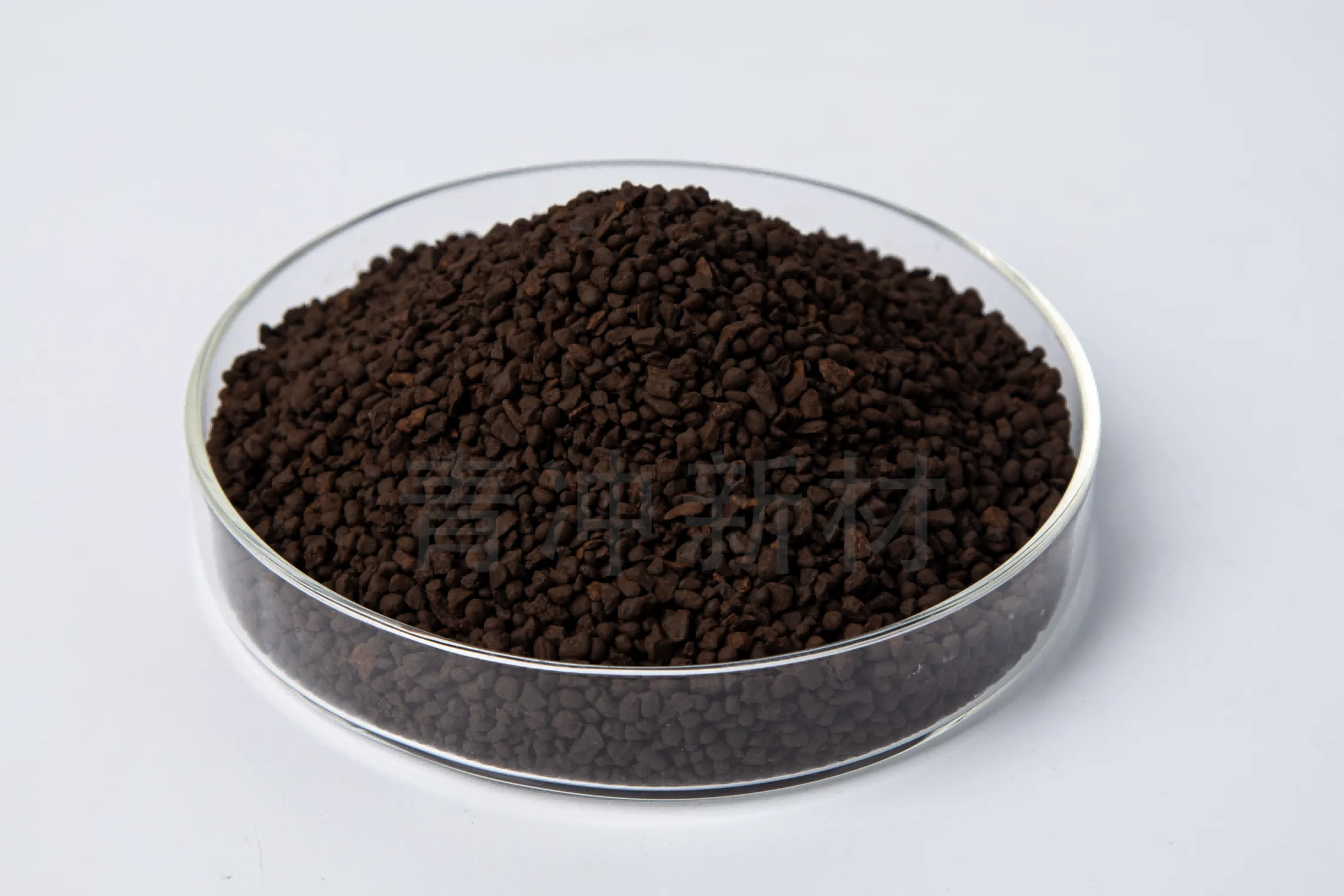
Key Technical Differences: Manganese Media vs. Sand
When designing a filtration system, engineers need to look at specific performance metrics. Here is how the two compare head-to-head.
1. Contaminant Removal Capability
Sand Filters: Primarily remove turbidity and suspended solids larger than 20-40 microns. They have zero chemical effect on the water profile.
Manganese Media: Removes turbidity PLUS dissolved iron, manganese, and hydrogen sulfide (H2S). It effectively treats groundwater with iron content up to 20mg/L and manganese up to 10mg/L (depending on the specific grade).
2. Reaction Time and Flow Rates
In a sand filter attempting to remove iron (via pre-oxidation), the contact time required in the aeration tank can be lengthy.
In contrast, Manganese Filter Media allows for contact oxidation filtration. The reaction happens almost instantly upon contact. This allows for higher Service Flow Rates (SFR) compared to passive systems, meaning you can treat more water volume with a smaller vessel footprint.
3. Regeneration and Backwashing
Both systems require backwashing. However, the "ripening" period differs. Silica sand is static. Manganese media, specifically our processed manganese sand, forms a stronger active membrane after the initial run-in period.
Furthermore, the mechanical strength of the media matters. Low-quality media breaks down during vigorous backwashing. We prioritize high mechanical strength in our export-grade Manganese Filter Media to ensure minimal attrition loss during the backwash cycle, extending the media's operational lifespan.
Economic Analysis: The Cost of Ownership
Procurement managers often note that silica sand is cheaper per ton than manganese-based media. However, the Total Cost of Ownership (TCO) tells a different story.
The Hidden Costs of Sand for Iron Removal:
- Chemical Costs: Heavy reliance on strong oxidants (chlorine, potassium permanganate) upstream.
- Equipment Costs: Need for large reaction tanks or aeration towers.
- Maintenance: Clogging of injectors and downstream pipes due to incomplete oxidation.
The ROI of Manganese Media: By switching to a specialized Iron and Manganese Removal media, you simplify the process. The elimination of complex pre-treatment equipment often offsets the higher initial cost of the media. Additionally, the long lifespan of high-purity manganese sand (often lasting 3-5 years or more depending on water quality) provides long-term stability for industrial clients.
Choosing the Right Specification for Your Project
Not all manganese sand is created equal. As a specialized exporter of manganese chemicals and compounds, we see common pitfalls where buyers select the wrong specifications.
Key Specs to Watch:
- MnO2 Content: For high concentrations of iron/manganese, you need a higher percentage (e.g., >35%) of manganese dioxide.
- Grain Sze: Common sizes include 0.5-1.0mm or 1.0-2.0mm. The size must match your vessel’s nozzle design and desired flow rate.
- Uniformity Coefficient: A lower uniformity coefficient ensures better flow and less pressure drop.
We process our media to ensure high specific surface area and optimal activity. Whether you are retrofitting an old municipal plant or designing a new beverage factory water system, the quality of the raw ore determines the final water quality.
Conclusion
While traditional sand filters will always have a place in basic sediment removal, they are insufficient for modern industrial demands regarding heavy metals. The manganese filter media provides two functions because it operates as an oxidizing agent and a filtering system, which enables efficient work processes while maintaining compliance with iron and manganese regulations.
For international buyers seeking reliable performance, switching to active filtration is not just an upgrade; it is a necessity for water security.
Ready to optimize your water treatment projects?
Do not let dissolved contaminants compromise your system efficiency. Visit our product center to view detailed specifications, or contact our export team today for a competitive quote on Manganese Filter Media. Let us help you select the right grade for your specific water quality report.
FAQs
1. Can Manganese Filter Media replace silica sand in my existing tank?
Yes, in most cases. However, manganese media is heavier than silica sand. You may need to adjust your backwash flow rates to ensure the bed lifts sufficiently for cleaning without washing the media away.
2. Does Manganese Filter Media require potassium permanganate (KMnO4) for regeneration?
It depends on the specific type and water quality. Some high-content natural manganese sands work using only dissolved oxygen in the water. However, for continuous high-performance iron removal, intermittent or continuous dosing of an oxidant helps maintain the catalytic activity of the MnO2 layer.
3. What is the typical lifespan of your Manganese Filter Media?
Under normal operating conditions and with proper backwashing, our high-quality manganese media typically lasts between 3 to 5 years before requiring top-up or replacement.
4. What pH level is required for the media to work effectively?
Generally, for iron removal, a pH of 7.0 or higher is ideal. For manganese removal, a slightly higher pH (8.0-8.5) is often recommended to ensure rapid oxidation.
5. How do you package the media for export?
We understand the rigors of international shipping. Our media is typically packed in durable 25kg or 50kg woven bags, often palletized and shrink-wrapped, or in 1000kg Jumbo bags (Super Sacks) for large-scale industrial handling.