EN
EN
 CN
CN
 fr
fr es
es ar
ar ru
ru de
de pt
pt tr
tr vi
vi it
it ja
ja ko
ko hi
hi

Manganese Dioxide: The Silent Force Behind Casting Excellence
In the bustling heart of foundries, where molten metal swirls like liquid fire and the air resonates with the sounds of creation, there is a silent guardian—manganese dioxide. Often overlooked, this unpretentious compound has the power to turn chaos into precision and imperfection into art. Its role in casting risers is truly remarkable, a story that weaves together science and passion.
The Alchemy of Perfection
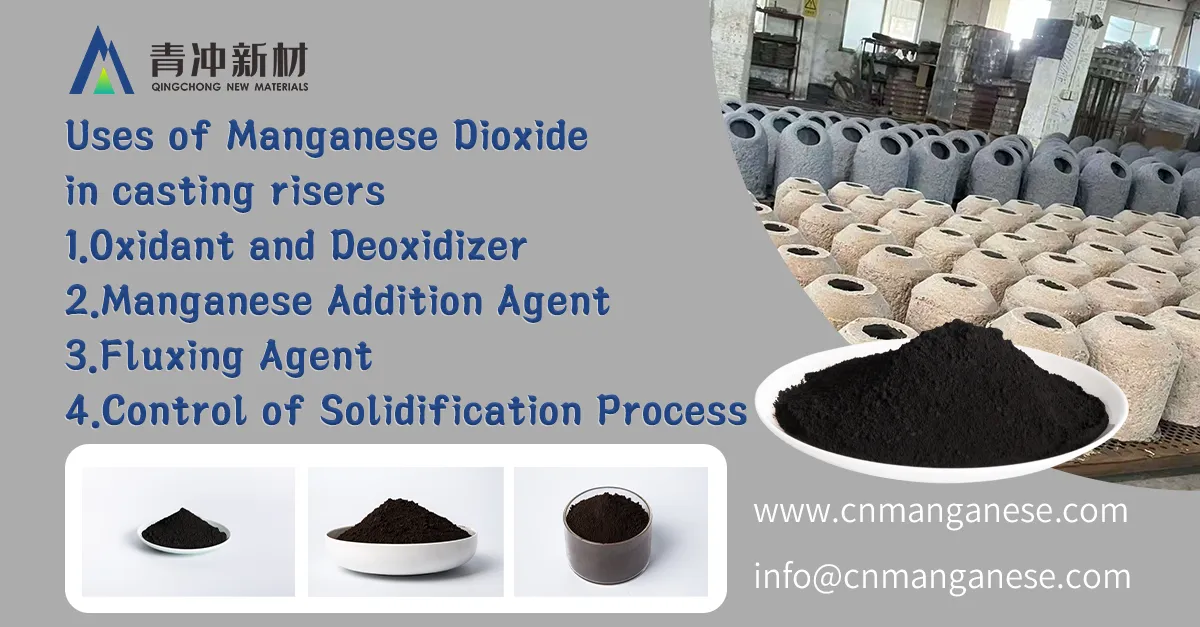
Casting risers, those unassuming reservoirs of molten metal, are the unsung lifelines of foundry work. They act as sentinels, making sure that every part of a mold is filled, every shrinkage is accounted for, and every casting is flawless. But what gives life to these risers? Enter manganese dioxide—a dark, mysterious powder full of latent energy.
When added to riser compounds, manganese dioxide becomes a master of heat. It triggers exothermic reactions, releasing a controlled amount of heat that keeps the molten metal fluid and active. It extends the molten state, resisting the onset of solidification. The result? Risers that supply the casting for longer and more effectively. No voids. No defects. Just perfect castings.
A Quiet Influence in the Flames
Manganese dioxide's magic isn't just about chemistry. In shell molds and sand castings, it stabilizes binders, strengthening the riser's structure. It withstands moisture and decay, remaining strong against the test of time. And when the molten metal cools, manganese dioxide leaves no trace—no scars, no residues—only the satisfaction of a job well done.
Why It Matters: A Tribute to Foundries
To think of manganese dioxide as "just an additive" is to miss the essence of casting. In its unassuming black particles lies the spirit of innovation. Born out of necessity, it meets the demands of foundry workers for precision, efficiency, and quality. It's the difference between a flawed piece and a masterpiece, between wasted effort and success.
Imagine a world without it: Risers failing too soon, metal solidifying mid - flow, and castings ruined by the rush. Manganese dioxide prevents this. It's the keeper of quality, the enabler of dreams, and the quiet force that allows art to flourish in the industrial world.
A Future Shaped by Fire
As foundries change, adopting automation and sustainable practices, manganese dioxide remains relevant. Researchers are exploring its more eco - friendly uses, such as in bio - based binders and waste reduction. This shows that even an old ally can adapt to modern needs. Its core role, however, stays the same: a reliable partner in humanity's ongoing work with metal.
So, the next time you see a cast iron sculpture, a machine part, or an engine block, remember the dark powder that made it possible. Manganese dioxide doesn't seek praise. It only asks to play its part, quietly and effectively, in the act of creation. And in its modesty, it becomes timeless.
In the process of metal - making, manganese dioxide is more than a compound—it's a promise.